How Stephen Gould Scaled Its Capacity by 30% without Making a Single Hire

Employers believe that they're effectively communicating company goals–but employees disagree.
Slingshot's 2024 Digital Work Trends reveals that most employees are unaware of how their individual contributions at work support larger company goals and growth. For its new report, the work management platform surveyed 250+ full-time U.S. employees and managers about how things like transparency into company goals, time spent on digital devices, workload and workplace tools play into employees' productivity and performance.
PART 2: EMPLOYEE PRODUCTIVITY
Below are the findings for Part 2 of the 2024 Digital Work Trends report, which explores the key factors that impact workers' productivity from the perspective of both employees and employers.
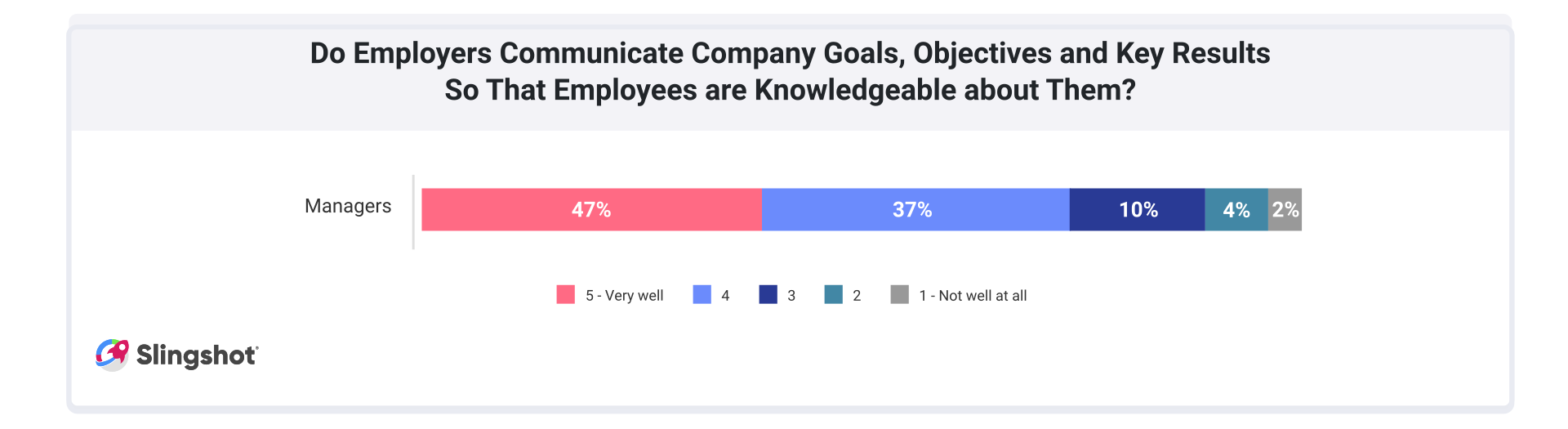
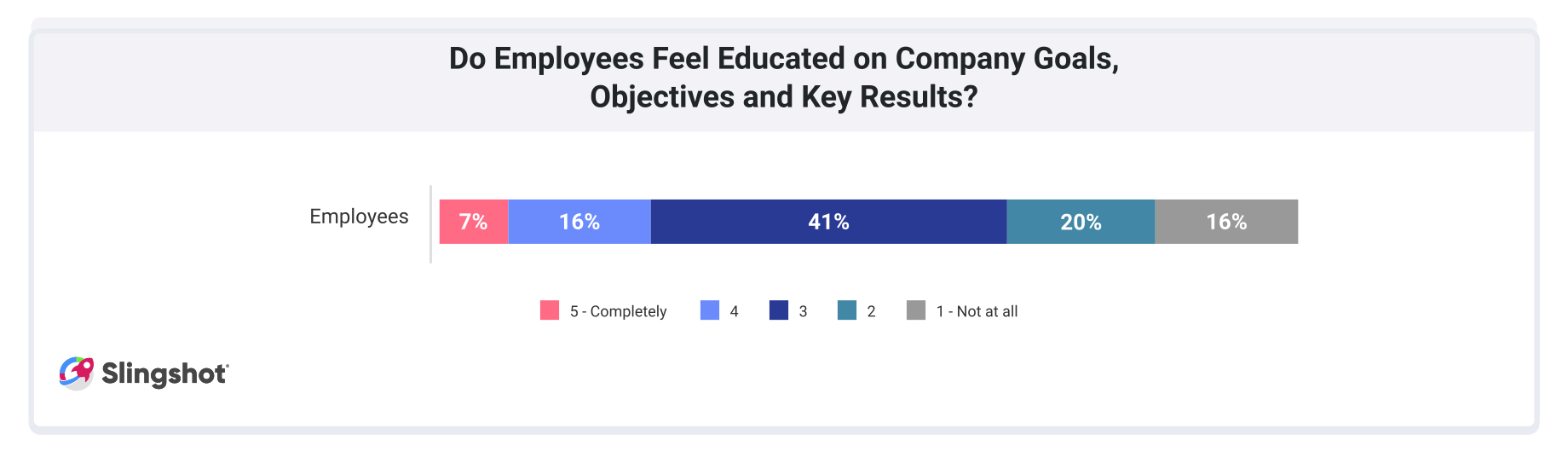
Only (23%) of employees feel educated on company goals, which is in stark contrast with the (84%) of leaders who say they're effectively communicating business goals, objectives and key results to employees.
More than half of employees (51%) say that having increased transparency into these goals would help them to better manage their workload and drive productivity.
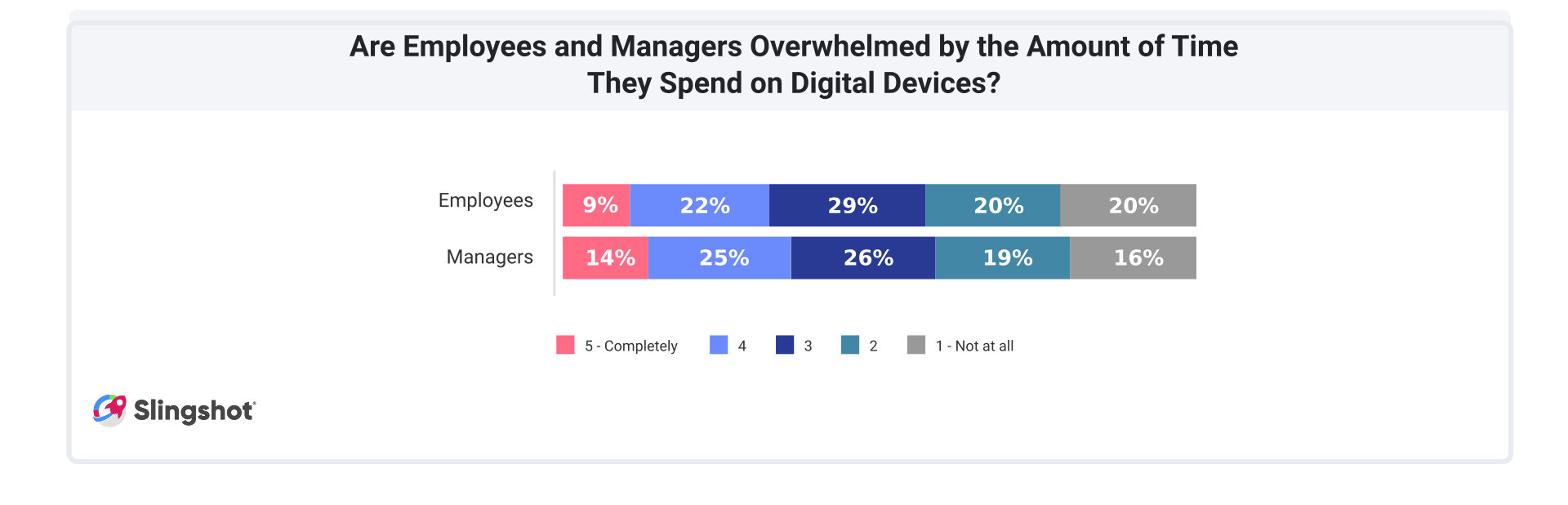
With teams spending an average of 8 hours a day on screens (i.e. computers, televisions, phones) for both work and recreational activities, it's no wonder one-third (34%) of workers say they're overwhelmed by the amount of time they spend on digital devices.
More managers experience digital exhaustion, or are overwhelmed by the amount of time they spend on digital devices (39%), compared to employees (31%).
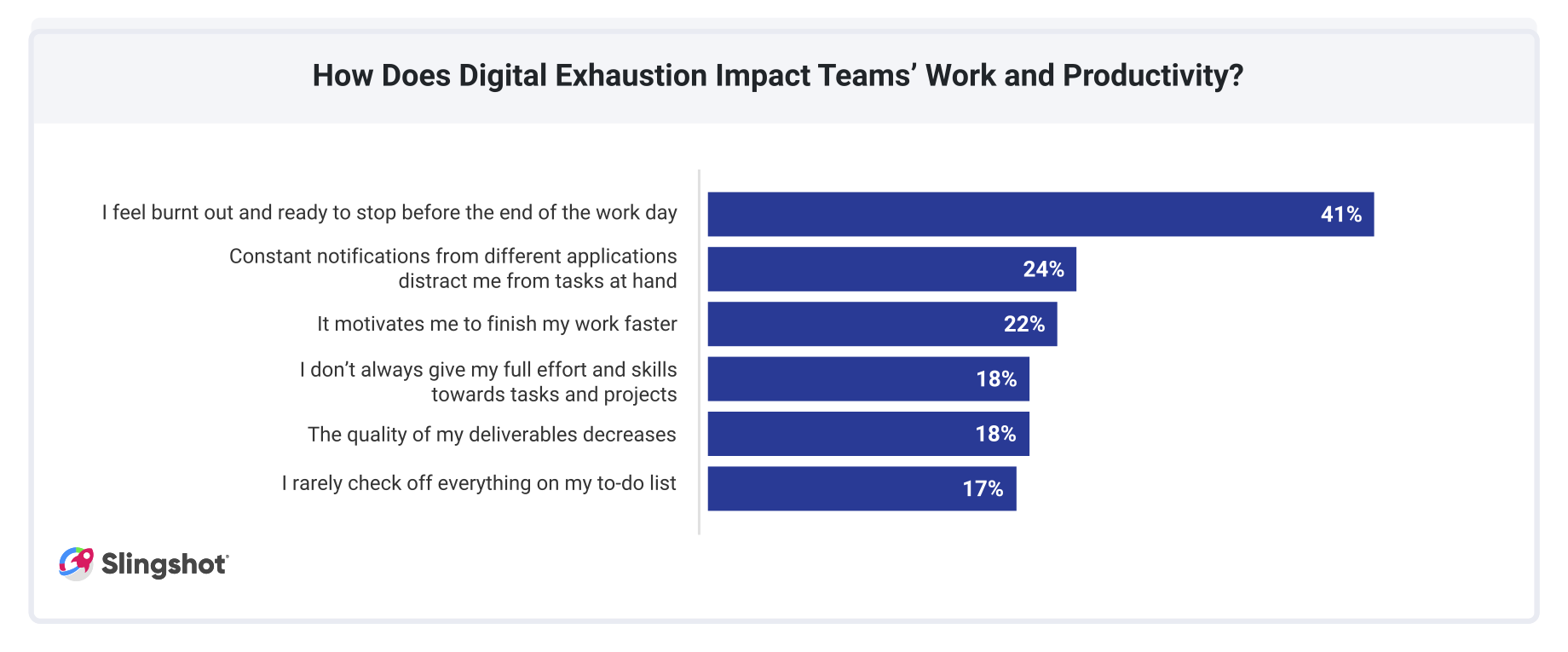
With an excessive amount of screen time comes lower productivity. Forty-one percent (41%) of teams say they feel burnt out due to digital fatigue and (18%) say they're not giving tasks their full attention and decreasing the quality of deliverables.
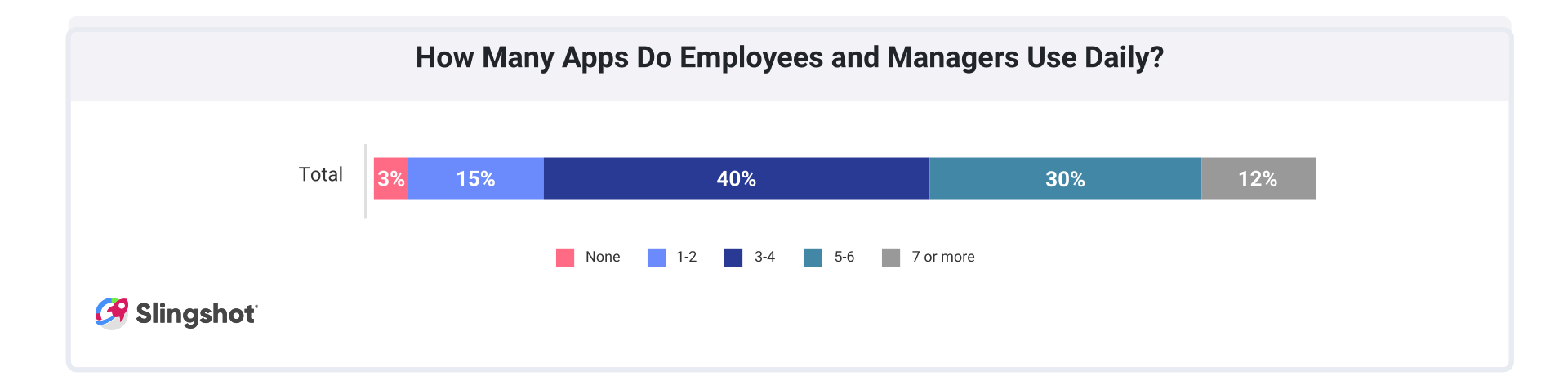
Nearly half (42%) of employees and leaders use five or more workplace applications per day, with (12%) saying they use seven or more.
This overload of apps is taking more than just teams' time–but their productivity. Sixteen percent (16%) of teams say using too many applications contributes most to their digital exhaustion and nearly one-fourth (24%) say that app notifications are distracting to daily tasks.
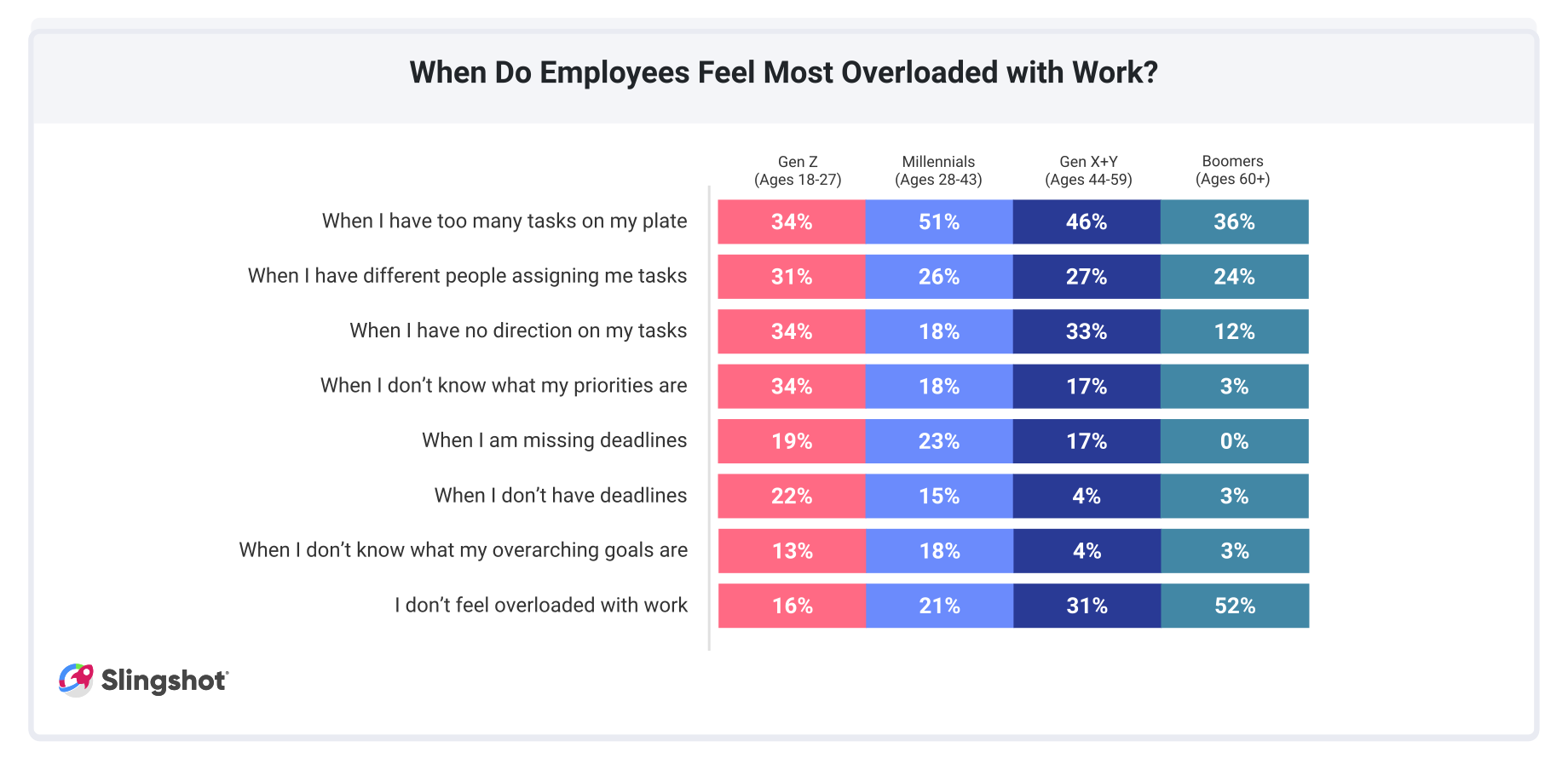
Most employees (70%) have felt overloaded at work, but Boomer employees feel the least amount of pressure when it comes to workload.
More workers aged 60+ say they aren't overloaded with work (52%) than cite any one situation when they feel overloaded. This is compared with 16% of Gen Z workers (ages 18-27), 21% of Millennials (ages 28-43) and 31% of Gen X + Y workers (ages 44-59) that feel the same.
Boomer employees also feel less digital fatigue than younger employers, with 53% of Gen Z-ers feeling digitally exhausted compared to 18% of Boomers.
More than one-third (38%) of employees and leaders feel pressure to respond to work-related correspondence outside of work hours.
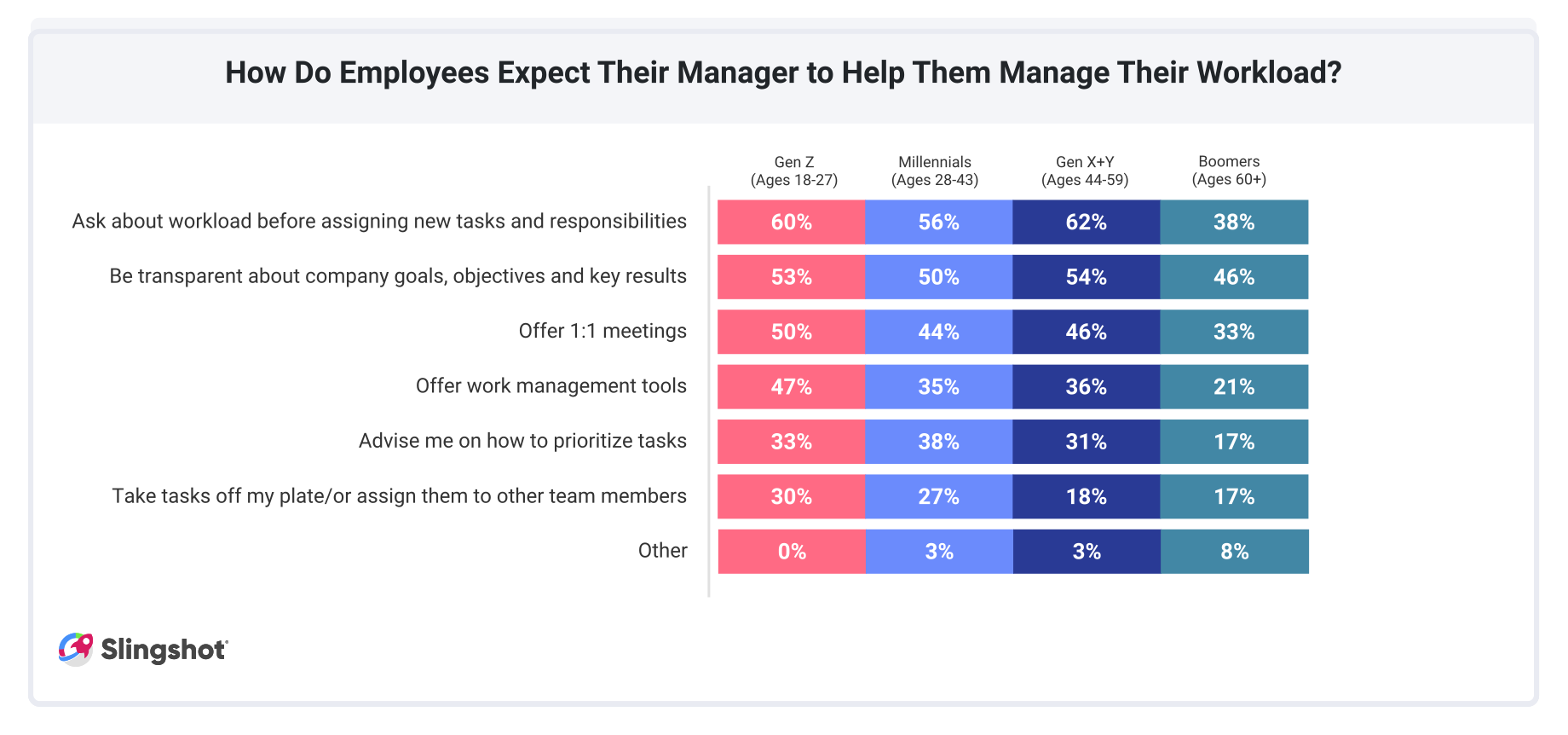
To address this and encourage more work-life balance, employees want employers to encourage them to unplug at the end of the workday (67%), not expect employees to be available after hours (55%) and not ask employees for deliverables after work hours (45%).