Cómo Stephen Gould escaló su capacidad un 30 % sin realizar una sola contratación

Biblioteca de plantillas

Los equipos de marketing no tienen un problema de visibilidad.
Tienen un problema de respuesta.
Las organizaciones de marketing actuales pueden ver problemas de rendimiento más rápido que nunca. Los dashboards muestran cambios en el rendimiento de campañas, contribución al pipeline y tasas de conversión en tiempo casi real.
Pero ver un problema y solucionarlo son dos cosas muy diferentes.
En todas las organizaciones, el mismo patrón se repite:
Aparece un problema de rendimiento. Se discute. Se identifican acciones. Y, sin embargo, el cambio significativo ocurre demasiado tarde — después de que el impacto ya ha afectado el pipeline y los ingresos.
Esto es lo que llamamos la brecha de señal a acción — el retraso entre el momento en que se identifica una señal de rendimiento y el momento en que se toma una acción coordinada.
Este documento explica por qué existe esa brecha, qué le cuesta a los equipos de marketing y cómo las organizaciones de alto rendimiento la están cerrando.
Complete el formulario para continuar leyendo
Durante la última década, la tecnología de marketing ha mejorado dramáticamente la visibilidad del rendimiento.
Los equipos ahora tienen acceso a dashboards que rastrean:
Este nivel de visibilidad ha cambiado fundamentalmente cómo opera el marketing.
Los líderes ya no tienen que adivinar lo que está sucediendo. Pueden ver el rendimiento claramente.
Pero la visibilidad por sí sola no mejora los resultados.
Muchas organizaciones han intercambiado inconscientemente un desafío por otro.
Pueden identificar problemas de rendimiento rápidamente — pero responder a esos problemas es donde el sistema se desmorona.
En la mayoría de las organizaciones, el viaje de insight a ejecución se ve así:
Los resultados se verifican — semanas después, cuando el impacto ya se ha compuesto.
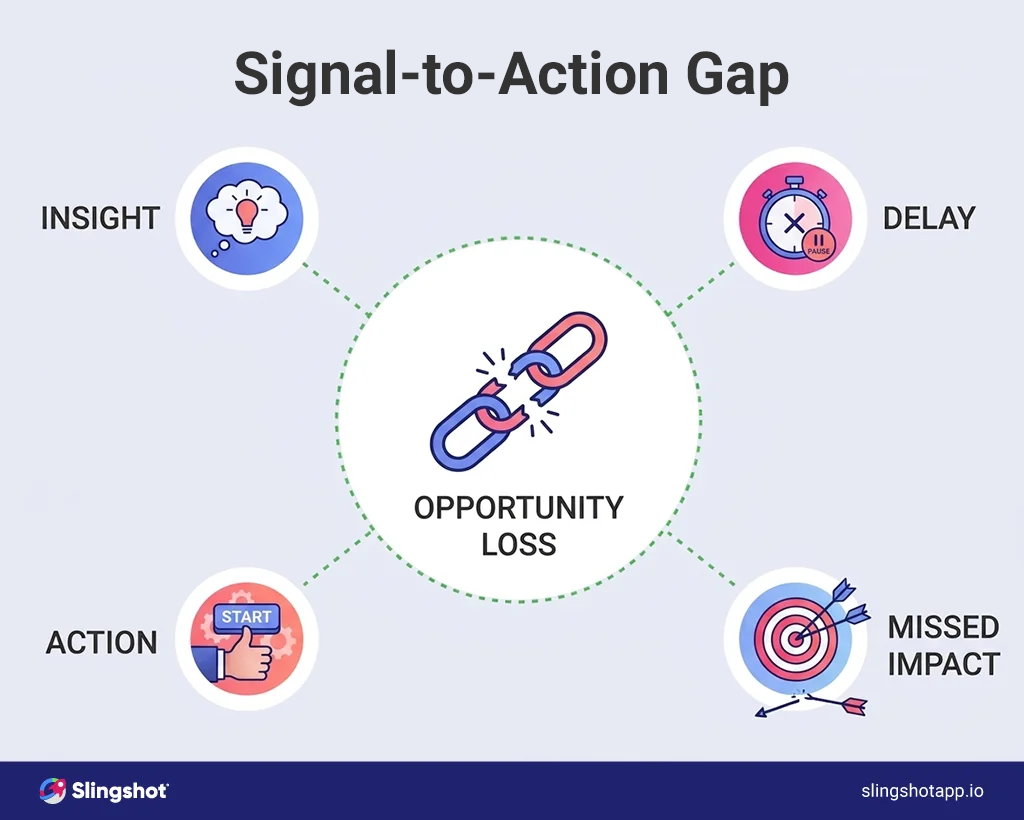
En cada paso, se introduce fricción.
La conexión entre ellos es manual — y frágil.
El resultado es predecible:
El insight se reconoce, se discute, y luego pierde lentamente impulso a medida que se mueve entre herramientas y equipos.
Esta es la brecha de señal a acción — y existe en casi todas las organizaciones de marketing.
El impacto de esta brecha no es abstracto. Se muestra de formas medibles en el rendimiento de marketing.
Ciclos de optimización más lentos
Los equipos responden a problemas de rendimiento días o semanas después de que aparecen, lo que reduce la efectividad de los ajustes de campaña.
Responsabilidad fragmentada
La propiedad de las acciones de seguimiento se vuelve poco clara a medida que el trabajo se mueve entre sistemas y equipos.
Confianza reducida en informes
Los ejecutivos cuestionan por qué los problemas conocidos no se abordaron antes, incluso cuando la visibilidad era clara.
Operaciones de marketing ineficientes
Los equipos gastan más tiempo coordinando los siguientes pasos que ejecutando mejoras.
Individualmente, estos problemas parecen manejables. Juntos, se componen en una ejecución más lenta, gasto desperdiciado y oportunidades de ingresos perdidas.
Los equipos de marketing de alto rendimiento no tratan las señales de rendimiento como insights pasivos.
Las tratan como triggers operativos.
Cerrar la brecha de señal a acción requiere un sistema que permita que los insights impulsen una ejecución inmediata y coordinada.
Un framework de señal a acción moderno incluye cuatro componentes:
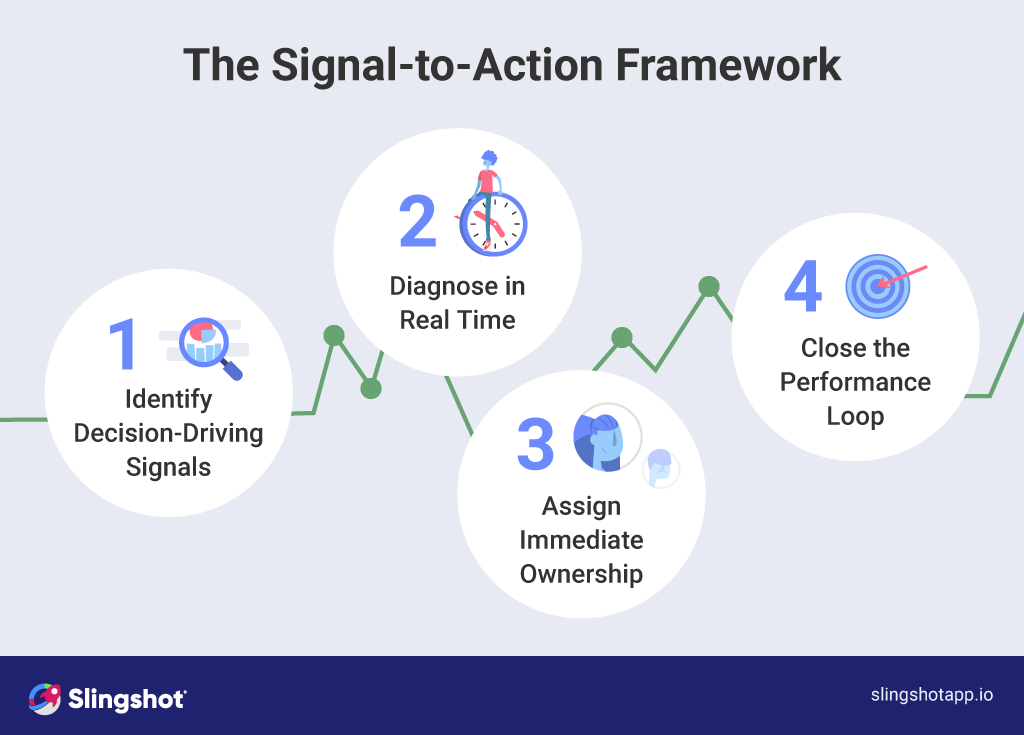
1. Identificar señales que impulsan decisiones
No todas las métricas requieren acción. Los equipos de alto rendimiento se enfocan en las señales que influyen directamente en los resultados, tales como:
Cuando estas señales cambian, desencadenan una investigación inmediata — no una discusión retrasada.
2. Diagnosticar en tiempo real
La velocidad del diagnóstico determina la velocidad de respuesta.
Los equipos necesitan una forma estructurada de evaluar rápidamente:
Este paso debe tomar horas, no días.
3. Asignar propiedad inmediata
Una vez que se identifica la causa raíz, la acción debe ser clara y responsable.
Los ejemplos incluyen:
Cada acción debe tener:
La velocidad de ejecución es impulsada por la responsabilidad.
4. Cerrar el ciclo de rendimiento
Después de que se implementan las acciones, los equipos deben rastrear su impacto en relación con la señal original.
Este paso transforma correcciones aisladas en aprendizaje organizacional.
Asegura que los equipos no solo reaccionen — mejoren su capacidad de responder más rápido con el tiempo.
El framework en sí no es complejo.
El desafío radica en cómo están estructurados los sistemas de marketing.
La mayoría de las organizaciones funcionan en herramientas desconectadas:
Estos sistemas no comparten contexto.
Como resultado, los equipos se ven obligados a cerrar manualmente la brecha:
Esta coordinación manual introduce fricción.
La fricción introduce retraso.
Y el retraso impacta directamente en el rendimiento.
Cerrar la brecha de señal a acción requiere más que mejores dashboards.
Requiere conectar insights de rendimiento directamente a flujos de trabajo de ejecución.
Esta es la base de los analytics conectados a la ejecución.
Plataformas como Slingshot están diseñadas alrededor de este principio.
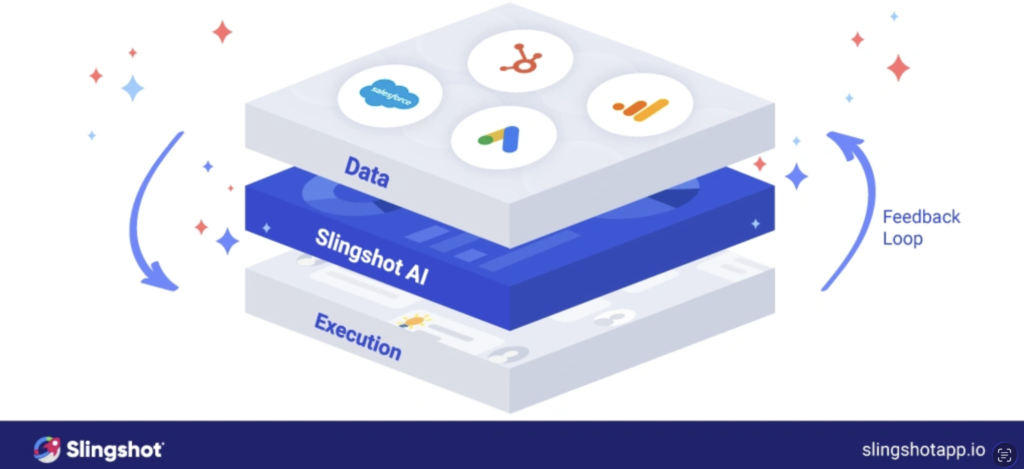
En lugar de separar datos, trabajo y colaboración, Slingshot los reúne en un único espacio donde insights y acciones existen juntos.
No hay transferencia entre identificar un problema y actuar sobre él — el sistema en sí se convierte en el puente.
Específicamente, Slingshot conecta:
El resultado es simple pero poderoso:
Cuando una métrica cambia, la acción sucede inmediatamente — con contexto completo y propiedad clara.
La diferencia entre sistemas desconectados y analytics conectados a la ejecución es más visible en cómo responden los equipos al cambio.
Antes
El rendimiento cae → reunión semanal → discusión → tarea creada en una herramienta separada → seguimiento disperso entre conversaciones → resultados revisados semanas después
Después
El rendimiento cae → señal identificada en tiempo real → causa raíz discutida en contexto → tarea creada y asignada inmediatamente → progreso rastreado contra el KPI original → resultados medidos en días
Esa diferencia de velocidad se compone.
Los equipos que operan en ciclos de optimización más rápidos:
A medida que las organizaciones de marketing maduran, la velocidad de ejecución se convierte en una ventaja competitiva.
Los equipos que se adelantan no son los que tienen más datos.
Son los que actúan sobre ellos más rápido.
Al cerrar la brecha de señal a acción, los equipos pueden:
Este es el cambio de reportar sobre rendimiento a impulsarlo activamente.
Los equipos de marketing modernos no están limitados por una falta de datos.
Están limitados por cómo sus sistemas traducen insight en acción.
La brecha de señal a acción ralentiza la ejecución, fragmenta la responsabilidad y reduce el impacto incluso de los mejores insights.
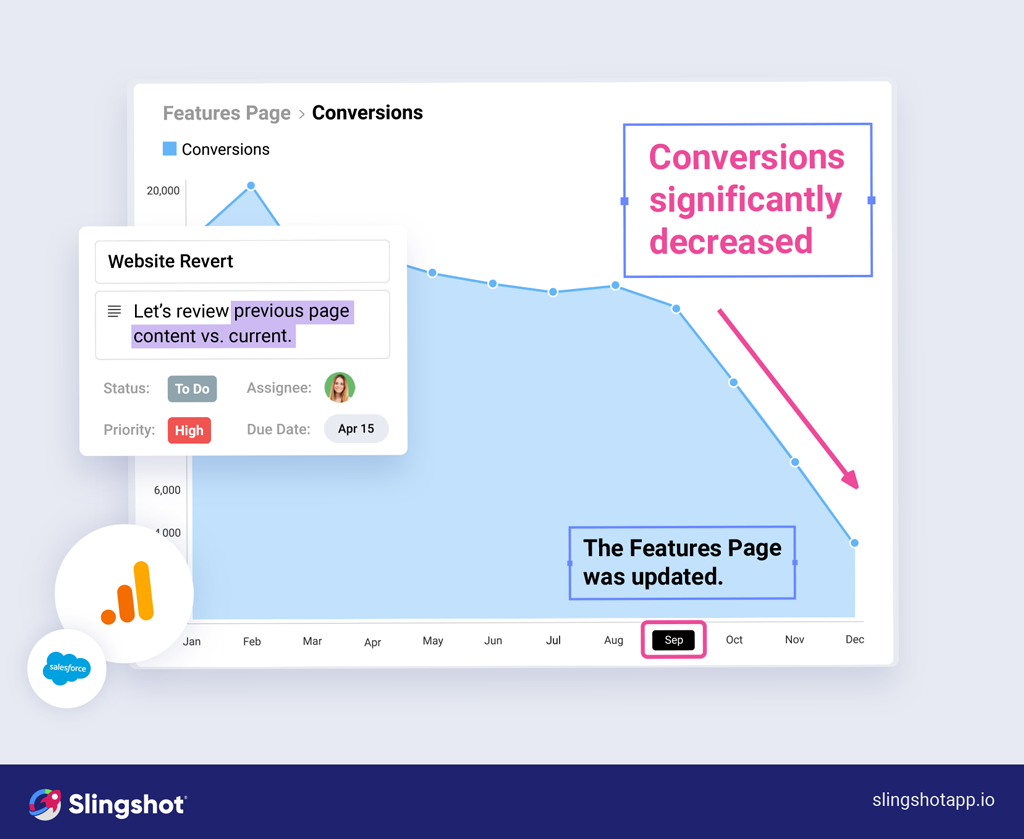
Cerrar esa brecha requiere más que mejor visibilidad.
Requiere sistemas que conecten señales de rendimiento directamente a la acción coordinada.
Las organizaciones que resuelven esto no solo operarán más eficientemente — superarán a los competidores a través de una ejecución más rápida y consistente.
Porque en el marketing moderno, el insight ya no es la ventaja.
La velocidad de ejecución lo es.
Vea cómo los equipos de marketing líderes cierran la brecha de señal a acción
Descubra cómo Slingshot conecta insights de rendimiento directamente a la acción coordinada para que su equipo pueda moverse más rápido, mantenerse alineado e impulsar resultados medibles.