



 Return to Blog

SaaS マーケティングチームが毎週パイプラインレポートを再構築する理由
SaaS マーケティングチームはデータに困っていません。パイプライン、属性、収益指標を明確かつ確実に組み合わせた信頼できるマーケティングレポートシステムが不足しています。
 Casey Ciniello 5min read
  ChatGPT
 Perplexity
Executive Summary:
SaaS マーケティングチームはデータに困っていません。パイプライン、属性、収益指標を明確かつ確実に組み合わせた信頼できるマーケティングレポートシステムが不足しています。
このサイクルは、データが CRM、分析、有料メディアシステムに分散している SaaS マーケティングレポート環境全般で一般的です。
最新のマーケティングレポートツールにもかかわらず、多くのチームは以下の作業を行っています。
- HubSpot からのデータエクスポート
- Salesforce の数字の調整
- GA4 での属性のクロスチェック
- 経営幹部会議の前のスライド再構築
彼らがそれを楽しんでいるからではありません。レポートシステムを完全に信頼していないからです。
SaaS でのマーケティングレポートとは何か
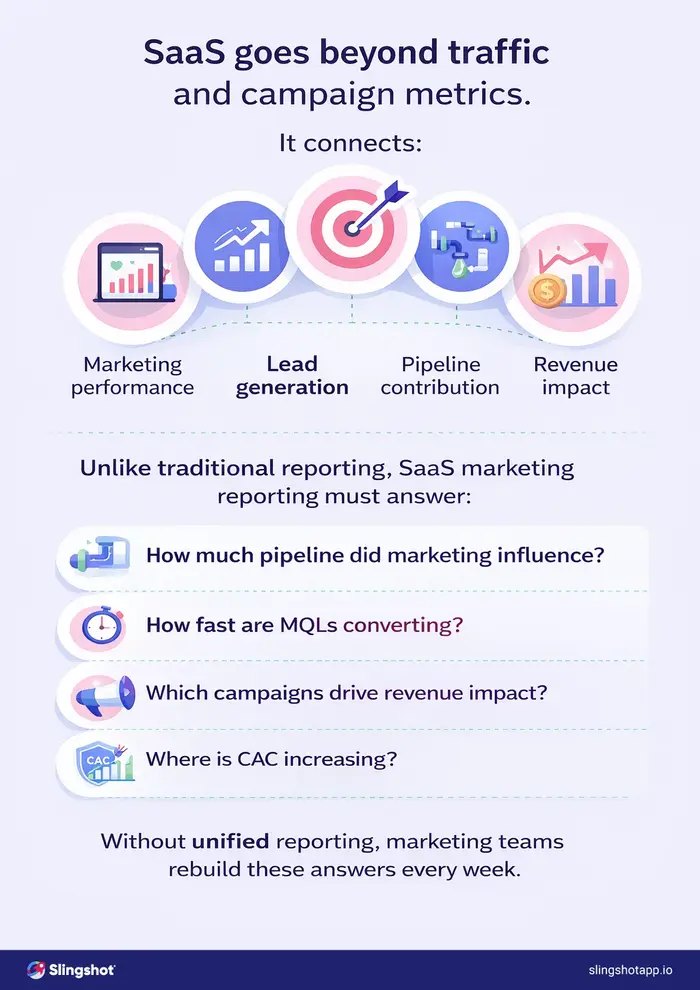
ほとんどの SaaS マーケティングチームは以下を使用しています。
- マーケティングパフォーマンス
- リード生成
- パイプライン貢献
- 収益インパクト
従来のレポートとは異なり、SaaS マーケティングレポートは以下に答える必要があります。
- マーケティングはどの程度のパイプラインに影響を与えましたか。
- MQL はどの程度の速度で変換されていますか。
- どのキャンペーンが収益インパクトを推進していますか。
- CAC がどこで増加していますか。
統一されたレポートがなければ、マーケティングチームはこれらの答えを毎週再構築しています。
レポート問題は量ではなく、断片化である
ほとんどの SaaS マーケティングチームは以下を使用しています。
- HubSpot または Marketo
- Salesforce
- Google Analytics
- 有料メディアダッシュボード
- 時々 Looker または Power BI
各ツールは機能します。しかし、どれもが全体像を示すわけではありません。そのため、レポートは接合演習になります。

マーケティングレポート自動化対手動レポート
多くのマーケティングレポートツールは可視性を約束しますが、少数のツールはレポートを調整された実行に接続します。
手動マーケティングレポート
- HubSpot からのエクスポート
- Salesforce レポートの取得
- シートの数字の調整
- 経営者向けデッキの再構築
マーケティングレポート自動化
- ライブ同期ダッシュボード
- 統一された属性ビュー
- 共有 KPI 可視性
- 接続された実行追跡
自動化は摩擦を軽減しますが、実行のない自動化は依然としてギャップを残します。

経営幹部の精査が増加しています
SaaS では、マーケティングはパイプラインに対して説明責任があります。
リーダーシップは尋ねません。「トラフィックはどうですか。」
彼らは尋ねます。
- パイプラインが低下した理由は何ですか。
- MQL ベロシティが低下した理由は何ですか。
- CAC を推進しているものは何ですか。
- このキャンペーンは収益に影響を与えていますか。
レポートに手動の調整が必要な場合、信頼性が低下します。マーケティングリーダーはダッシュボードを望んでいるだけではありません。彼らは確信を求めています。
ダッシュボードだけでは解決しない理由
ほとんどのマーケティングレポートソフトウェアは可視化に焦点を当てています。
ダッシュボードは以下を表示します。
- MQL トレンド
- パイプライン数
- CPA シフト
- チャネルパフォーマンス
- このキャンペーンは収益に影響を与えていますか。
しかし、パフォーマンスが変わるとどうなるのでしょうか。
通常。
- Slack スレッド
- 個別のタスク掲示板
- 会議
- 手動のフォローアップ
レポートはインサイトで止まり、勢いが減速します。実行は別の場所で行われます。
レポート再構築の実際のコスト
これは単なる時間ではありません。それは。
- 遅い経営幹部アップデート
- マーケティングと営業の間の不適合
- リアクティブなパフォーマンス管理
- 決定疲労
すべての更新がシステムの再説明を必要とする場合、システムは機能していません。
現代的な SaaS マーケティングレポートの外観
代わりに。
ツール → エクスポート → 調整 → スライド → 防衛
次のようになるはずです。
統一ビュー → コンテキスト → アクション → インパクト
それはを意味します。
- 1 つの信頼できるパフォーマンスビュー
- それらに影響を与える仕事に接続された KPI
- 属性透明性
- 調整されたフォロースルー
パイプラインシグナルから調整されたアクションへ
パイプラインが低下すると、高性能なチームは。
- すぐにそれを見る
- 是正措置を割り当てる
- 実行を追跡する
- 影響を監視する

収益責任マーケティングへのシフト
収益指向のマーケティングレポートはダッシュボード以上のものが必要です。説明責任が必要です。SaaS マーケティングはトラフィックに関するだけではありません。
それはについてです。
- パイプライン貢献
- MQL → SQL ベロシティ
- 収益インパクト
- クロスチームアライメント
これは、データと実行を接続するレポートソフトウェアが必要です。
ダッシュボードをもっと。
Slingshot が適合する場所
Slingshot は 収益責任マーケティングチーム 向けに構築されました。
接続します。
- パイプラインパフォーマンス
- キャンペーン実行
- 所有権追跡
- 経営幹部対応ビュー
だから、リーダーシップが尋ねるとき。
- 「何が変わったか。」
- デッキを再構築しないでください。
- リーダーシップが信頼できるシステムを表示します。
再構築をやめてください。リーダーシップを開始します。
チームが毎週レポートを接合し続けている場合、問題はデータではなく、周辺の切断です。Slingshot がレポートの明確性と 1 つのシステムへの調整されたアクションをどのように提供するかを確認してください。
最後の考え
最新の SaaS マーケティングチームはダッシュボードをもっと必要としません。
彼らは必要です。
- 1 つの信頼できるビュー
- 明確な属性
- 調整された実行
- 収益レベルの可視性
レポートは防衛のように感じるべきではありません。それはリーダーシップのように感じるべきです。
SaaS マーケティングレポートに関するよくある質問
SaaS でのマーケティングレポートは、キャンペーンパフォーマンス、リード生成、パイプライン貢献、収益インパクトを統合ビューに接続します。従来のレポートとは異なり、マーケティングがどのように収益に影響を与えるかを示す必要があります。トラフィックだけではなく。
パイプラインレポートソフトウェアは、マーケティングおよび収益チームが、キャンペーンが機会作成、MQL から SQL への変換、および収益アウトカムにどのように影響するかを追跡するのに役立ちます。CRM データをマーケティングパフォーマンスメトリクスと接続します。
データが個別のシステムに存在し、統一されたレポートがないため、チームは経営幹部の質問に答えるためにビューを手動でエクスポート、調整、再作成します。
- パイプライン貢献
- 属性可視性
- 変換ベロシティ
- キャンペーンパフォーマンス
- 収益インパクト
- 是正措置に関する明確な所有権