Como a Stephen Gould escalou sua capacidade em 30% sem fazer uma única contratação

 Casey Ciniello 6min read
 Executive Summary:
As equipes modernas de marketing dependem de uma impressionante pilha de software para ferramentas de relatório de marketing.
Plataformas de análise rastreiam o desempenho. Dashboards de publicidade mostram resultados de campanhas. Sistemas CRM revelam o impacto no pipeline. Discuta as necessidades de integração de rastreamento de desempenho de marketing. Ferramentas de gerenciamento de projetos organizam o trabalho por trás de cada campanha.
Cada sistema desempenha um papel importante.
No entanto, juntas, essas ferramentas frequentemente criam um problema que a maioria das equipes de marketing luta para reconhecer: a lacuna entre descobrir insights e agir sobre eles.
Os profissionais de marketing identificam mudanças de desempenho em ferramentas de relatório, mas o trabalho necessário para responder a elas acontece em outro lugar completamente.
Essa desconexão cria o Insight-to-Execution Gap (Lacuna de Insight para Execução). É o atraso entre quando as equipes veem um problema de desempenho em seu software de relatório de marketing e quando agem sobre isso.
E esse atraso silenciosamente reduz o desempenho de marketing.
A maioria das ferramentas de relatório de marketing foca em visibilidade, não em ação. Ferramentas de análise de marketing mostram desempenho. Ferramentas de gerenciamento de projetos de marketing organizam execução. Mas raramente funcionam juntas em um único fluxo de trabalho.
A maioria das organizações de marketing é excelente em medir o desempenho.
Eles rastreiam métricas como:
Essas métricas ajudam as equipes a entender como as atividades de marketing estão se desempenhando. Mas a medição sozinha não melhora os resultados. O valor real dos dados de desempenho vem de quão rapidamente as equipes respondem a isso.
Infelizmente, o fluxo de trabalho típico de marketing introduz fricção exatamente neste momento. Um profissional de marketing identifica um problema de desempenho em um dashboard. Para resolvê-lo, ele deve sair da ferramenta de relatório e entrar em um sistema de gerenciamento de projetos para planejar a resposta.
Tarefas devem ser criadas. Membros da equipe atribuídos. Experimentos planejados. Mudanças de campanha programadas. Cada etapa adiciona tempo entre insight e ação.
Esse atraso é a Lacuna de Insight para Execução.
Alternar entre ferramentas de fluxo de trabalho de marketing pode parecer menor. Mas se acumula rapidamente.
Mas a alternância de contexto repetida tem um impacto mensurável em como as equipes trabalham.
Toda vez que os profissionais de marketing se movem entre sistemas, eles devem mudar seu foco:
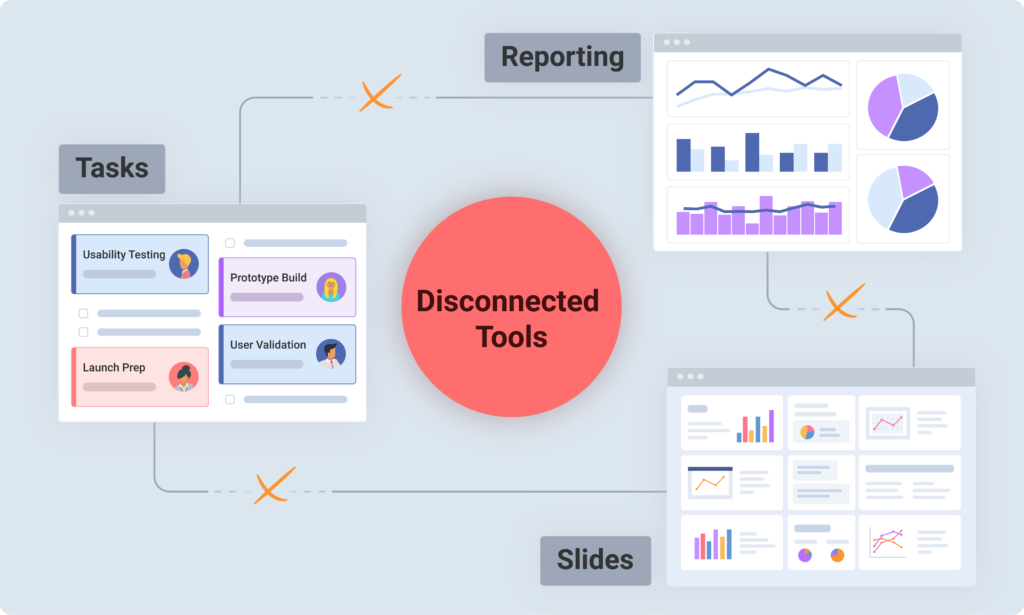
Essas transições quebram o foco e atrasam as decisões dentro de seu fluxo de trabalho de análise de marketing.
Em vez de responder imediatamente aos sinais de desempenho, as equipes frequentemente adiam a ação até a próxima reunião ou ciclo de relatório.
Com o tempo, isso reduz a taxa de melhoria nas campanhas.
O sucesso de marketing geralmente depende de quão rapidamente as equipes conseguem detectar e responder a mudanças de desempenho.
Organizações de alto desempenho tratam a otimização de marketing como um processo contínuo. Eles analisam resultados, ajustam campanhas, executam experimentos e aprendem com os resultados. Este ciclo se repete constantemente.
Quando a Lacuna de Insight para Execução é grande, esse ciclo fica mais lento. Um problema de desempenho descoberto hoje pode não gerar ação por dias ou até semanas.
Enquanto isso, as campanhas continuam sendo executadas com desempenho abaixo do ideal. Pequenos atrasos se acumulam. Com o tempo, eles reduzem o ROI da campanha, reduzem os ciclos de teste e desperdiçam gastos em anúncios.
A Lacuna de Insight para Execução existe em grande parte porque as ferramentas de marketing evoluíram em categorias separadas.
Cada categoria de software executa sua função bem, mas as equipes de marketing não operam em fases separadas de análise e execução.
Insights derivados de dados de desempenho devem ser agidos imediatamente.
Quando essas duas funções vivem em sistemas diferentes, os profissionais de marketing são forçados a preencher a lacuna manualmente.
As organizações de marketing mais eficazes reconhecem que a velocidade de resposta é tão importante quanto a precisão do insight.
Em vez de depender de ferramentas desconectadas, eles constroem fluxos de trabalho que conectam dados de desempenho e execução de marketing.
Isso permite que as equipes se movam mais rapidamente em todo o ciclo completo de gerenciamento de desempenho de marketing: dados → insight → ação → otimização
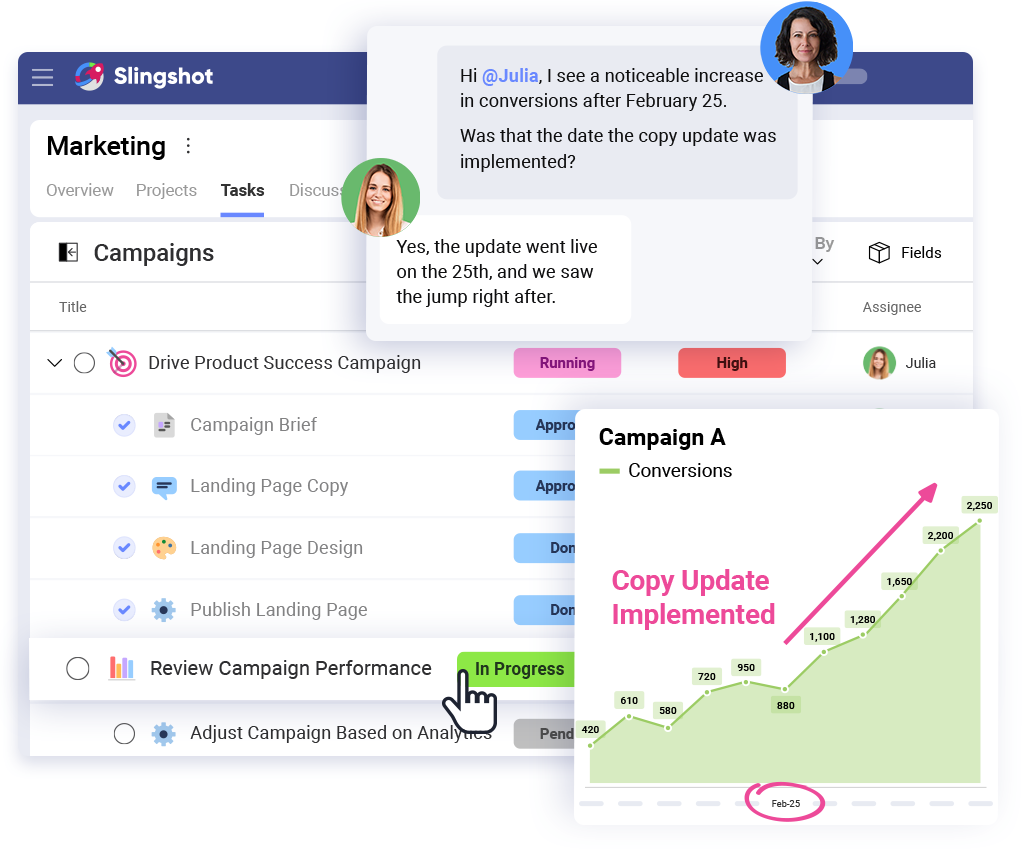
Por exemplo, quando o desempenho da campanha de marketing muda (usando ferramentas de gerenciamento de campanha de marketing), os profissionais de marketing podem imediatamente:
Em vez de perder tempo navegando entre sistemas, a resposta acontece no mesmo ambiente operacional.
Quando relatórios e execução estão conectados, as equipes de marketing ganham várias vantagens.
Esta conexão transforma ferramentas de relatório de marketing em impulsionadores ativos de rastreamento e execução de desempenho de marketing.
Muitas equipes de marketing estão começando a resolver esse problema adotando workspaces de campanha estruturados que combinam relatórios, planejamento e execução. Se você está procurando um ponto de partida, explore o hub de modelos de marketing do Slingshot, que inclui modelos prontos para uso para gerenciamento de campanhas, rastreamento de desempenho e análise de marketing.
Fechar a Lacuna de Insight para Execução requer mais do que melhores dashboards.
Requer fluxos de trabalho de análise de marketing conectados que reunam três elementos:
Visibilidade de desempenho
As equipes devem ser capazes de ver os dados da campanha claramente e em contexto.
Coordenação operacional
Trabalho de marketing, campanhas, experimentos e otimizações devem ser organizados e visíveis.
Ação direta
Insights devem se traduzir imediatamente em tarefas e planos de execução.
Quando esses elementos existem no mesmo workspace, o tempo entre descobrir insights e implementar melhorias fica dramaticamente mais curto.
As equipes de marketing frequentemente pensam em dashboards como ferramentas de relatório. Mas em organizações de alto desempenho, relatórios se tornam algo mais poderoso. Eles se tornam o ponto de partida para ação.
Em vez de revisar relatórios apenas após as campanhas serem executadas, as equipes monitoram continuamente o desempenho e ajustam a estratégia em tempo real. Esta abordagem transforma o gerenciamento de desempenho de marketing em um ciclo constante de melhoria.
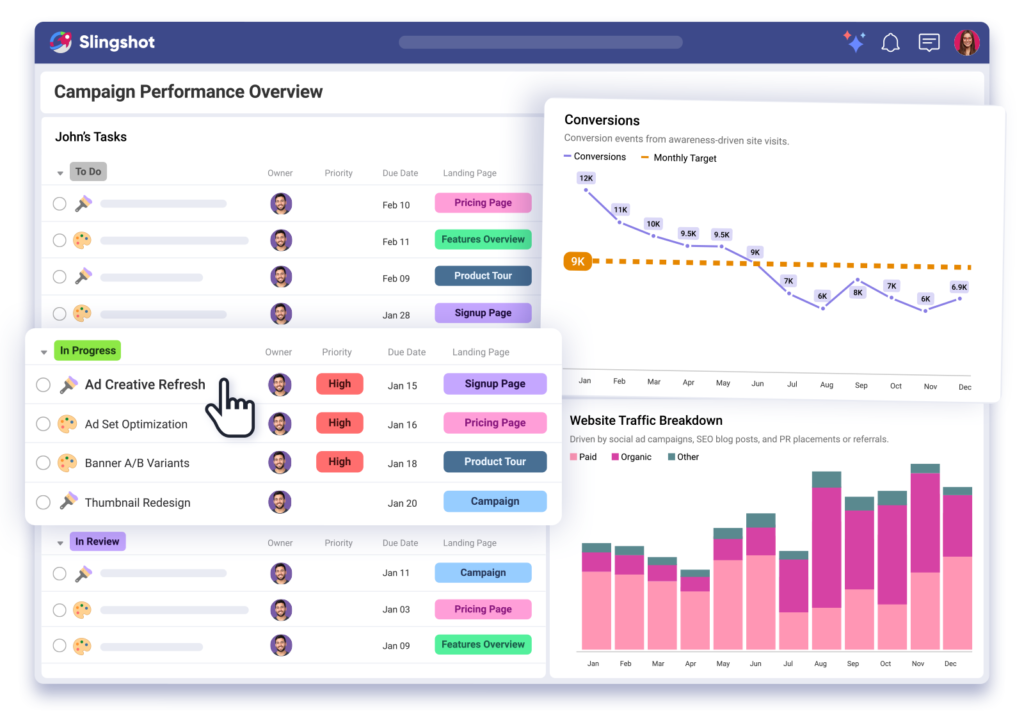
Com o tempo, as organizações que fecham a Lacuna de Insight para Execução se movem mais rápido, aprendem mais rápido e otimizam campanhas de forma mais eficaz.
Slingshot foi projetado para eliminar a lacuna entre insights de marketing e execução de marketing.
Ao reunir análise, colaboração e gerenciamento de projetos em um único workspace, as equipes de marketing podem se mover diretamente de insight de desempenho para otimização de campanha.
Em vez de alternar entre dashboards de relatório e ferramentas de gerenciamento de projetos, as equipes podem analisar resultados, planejar ações e coordenar melhorias em um só lugar.
E quando insight e execução finalmente vivem juntos em um workspace como Slingshot, as equipes de marketing ganham algo incrivelmente valioso: a capacidade de responder a mudanças de desempenho mais rapidamente

 Return to Blog

 ChatGPT
 Perplexity