Cómo Stephen Gould escaló su capacidad un 30 % sin realizar una sola contratación

Biblioteca de plantillas
 Casey Ciniello 12min read
 Executive Summary:
Los equipos de marketing de SaaS no luchan con ideas. Luchan con la consistencia. Una campaña tiene un buen desempeño. La siguiente tiene un bajo desempeño.
Otra muestra promesa pero tarda demasiado en optimizarse. Los resultados parecen impredecibles. No porque los equipos carezcan de estrategia. Sino porque carecen de un sistema.
El rendimiento del marketing de SaaS no se impulsa solo por campañas. El modelo operativo de rendimiento de marketing detrás de ellas lo impulsa.
Un modelo operativo de rendimiento de marketing define cómo conecta su equipo estrategia, ejecución y rendimiento en un único sistema repetible. Sin él, incluso las campañas fuertes no logran escalar.
La mayoría de equipos de SaaS abordan el marketing como una serie de campañas.
Planificar → lanzar → analizar → repetir.
En la superficie, eso suena estructurado.
Pero en realidad, crea fragmentación.
Cada campaña se trata como su propia iniciativa:
Hay poca continuidad entre los esfuerzos.
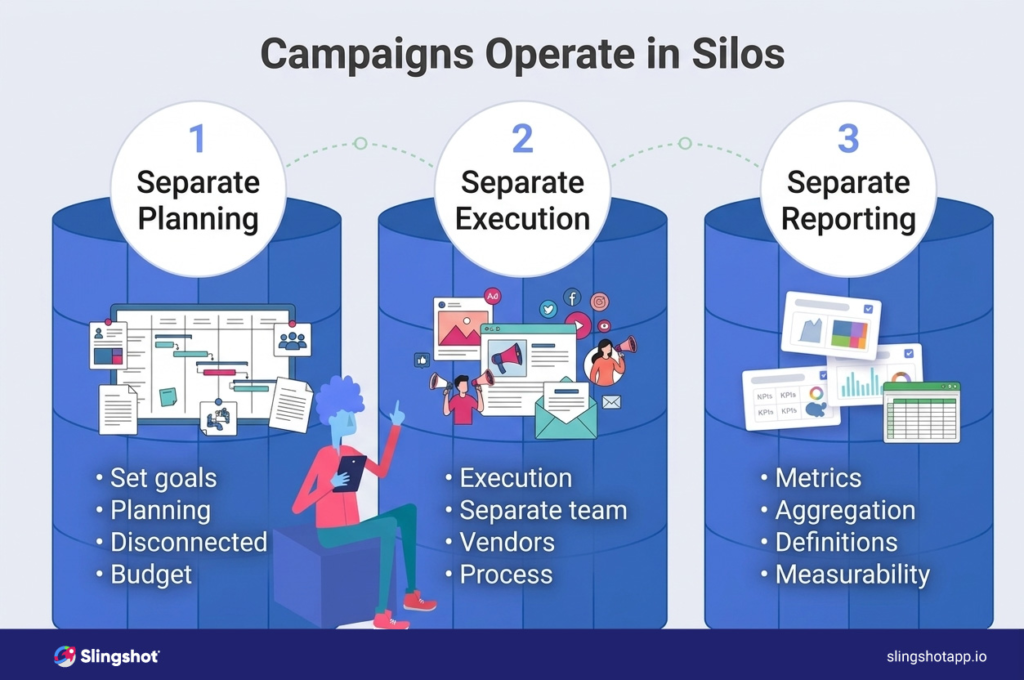
Entonces los equipos no están generando impulso; están comenzando de nuevo cada vez. Aquí es donde se desmorona la mayoría de los modelos operativos de marketing de SaaS. En lugar de componer el rendimiento, los equipos reinician el contexto con cada nueva campaña. El aprendizaje permanece aislado. La ejecución varía. Los resultados fluctúan.
La mayoría de los equipos revisan el rendimiento después de los hechos:
Para el momento en que se identifican los conocimientos, las oportunidades ya se han perdido. Este enfoque reactivo ralentiza la gestión del rendimiento del marketing. Está tomando decisiones basadas en datos obsoletos en lugar de señales en directo.
La ejecución de campañas sucede en un lugar.
Los datos de rendimiento viven en otro.
No hay conexión en tiempo real entre:
Esta desconexión es el problema raíz en la mayoría de los flujos de trabajo de análisis de marketing. Los datos existen, pero no influyen en la ejecución cuando importa.
Un modelo operativo de rendimiento de marketing es el sistema que define cómo su equipo:
No es una herramienta. No es un marco en una diapositiva.
Es cómo su equipo realmente opera día a día.
Piense en él como su marco de ejecución de marketing. Conecta cada etapa del trabajo, para que nada funcione de forma aislada.
El crecimiento de SaaS depende de:
Sin un modelo operativo definido:
El modelo operativo de rendimiento de marketing es lo que convierte el esfuerzo en resultados.
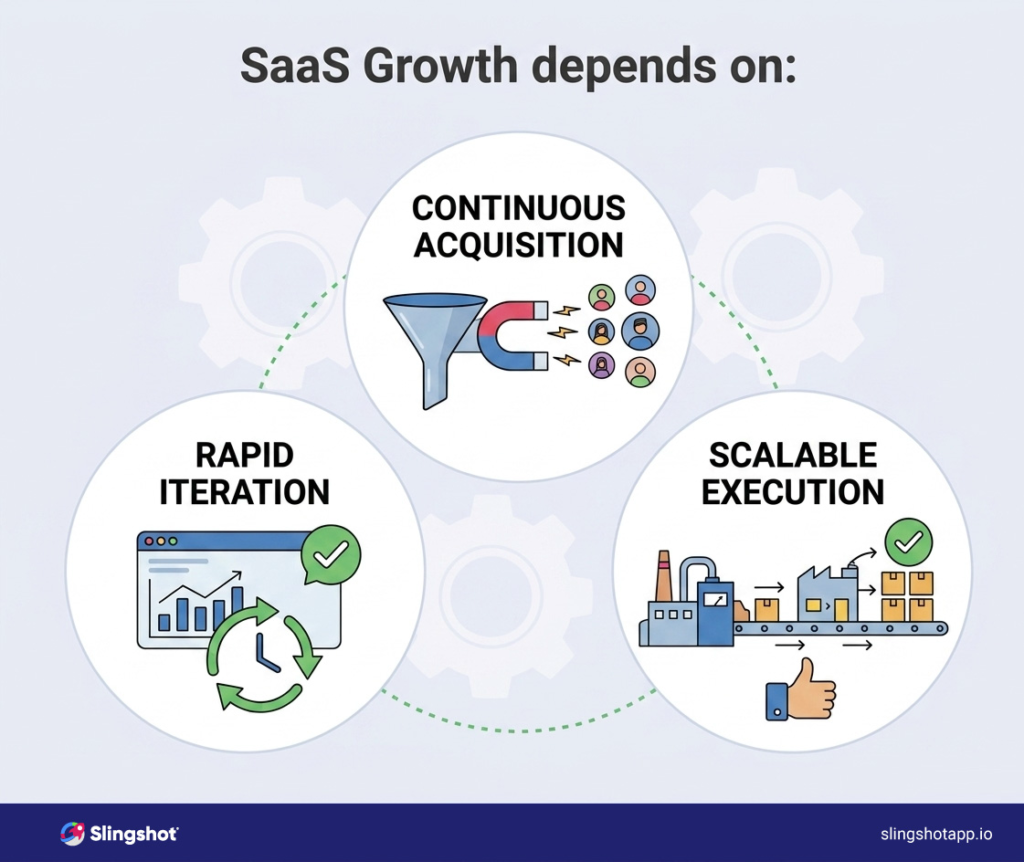
También permite la gestión del rendimiento de campañas a escala. En lugar de adivinar qué funciona, su equipo puede mejorar sistemáticamente los resultados con el tiempo.
Para impulsar un rendimiento consistente, los equipos de SaaS necesitan cuatro componentes conectados:
Aquí es donde se definen las campañas y prioridades:
Pero la planificación por sí sola no es suficiente. Necesita alimentar directamente la ejecución.
En un fuerte modelo operativo de marketing de SaaS, la planificación no es estática. Evoluciona en función de los datos de rendimiento. Los equipos revisitan suposiciones, refinan la orientación y ajustan las prioridades continuamente.
Por ejemplo: Si los costos de adquisición pagada aumentan, su capa de planificación debe cambiar inmediatamente el presupuesto hacia canales o segmentos de mayor rendimiento.
Cada campaña debe seguir un flujo de trabajo estructurado:
La ejecución debe ser:
Aquí es donde fallan la mayoría de los marcos de ejecución de marketing. El trabajo sucede, pero no está estandarizado. Cada campaña se ejecuta de manera diferente según el equipo o la línea de tiempo.
Los flujos de trabajo de ejecución sólidos eliminan la variabilidad. Definen cómo las campañas avanzan desde la idea hasta el lanzamiento con consistencia.
Flujo de trabajo de ejemplo:
El uso de un sistema centralizado como Slingshot permite que los equipos gestionen estos flujos de trabajo en un único lugar en lugar de en herramientas desconectadas.
Los datos de rendimiento deben ser:
Los equipos siempre deben saber:
Esta es la base del seguimiento del rendimiento de marketing. Sin visibilidad, la optimización se convierte en adivinanzas.
Los equipos de alto rendimiento crean paneles que se vinculan directamente a las campañas. No confían en informes estáticos. Monitorean el rendimiento mientras sucede.
Métricas de ejemplo:
Cuando el seguimiento del rendimiento está integrado en su sistema de operaciones de marketing, cada decisión se basa en datos.
Aquí es donde la mayoría de los equipos se quedan cortos.
Los conocimientos necesitan impulsar la acción inmediatamente.
No el próximo mes.
No el próximo trimestre.
Sino en el mismo flujo de trabajo.
Rendimiento → acción → optimización → mejora
Este es el núcleo de un flujo de trabajo de análisis de marketing efectivo. Los datos no solo deben informar los informes. Deben desencadenar la ejecución.
Ejemplo:
Sin bucles de retroalimentación, su modelo operativo de rendimiento de marketing se desmorona. Con ellos, se compone.
Los mejores equipos de marketing de SaaS no solo ejecutan campañas.
Ejecutan sistemas.
No solo en informes, sino en tiempo real.
Ven el rendimiento mientras sucede y se ajustan en consecuencia. Esto les permite detectar problemas temprano y capitalizar oportunidades más rápido que los competidores.
Los conocimientos solo tienen valor si generan acciones.
Los equipos de alto rendimiento:
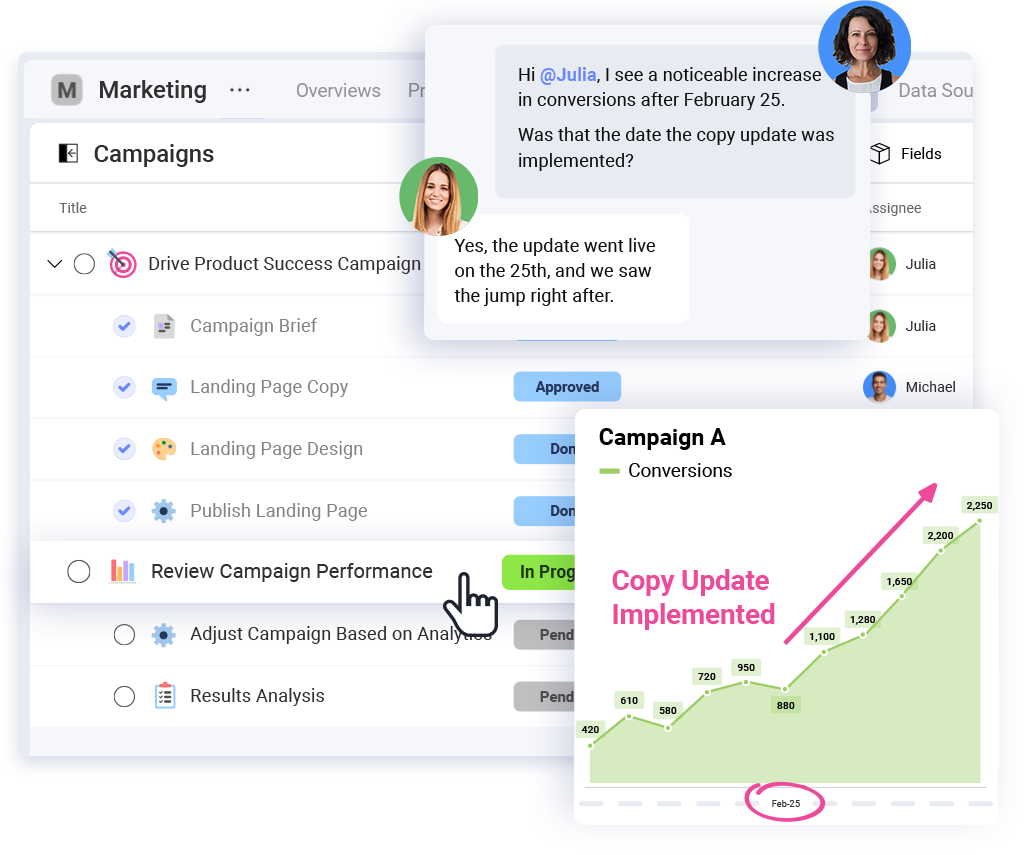
Esto es lo que separa la gestión de rendimiento de campañas sólida del marketing reactivo. Las decisiones suceden dentro del flujo de trabajo, no después de él
No hay brecha entre:
Todo vive en un sistema conectado. Este es el rasgo definitorio de un sistema de operaciones de marketing maduro. Cada función funciona desde la misma fuente de verdad.
Como resultado, los equipos se mueven más rápido, desperdician menos presupuesto y escalan lo que funciona de manera más efectiva.
Si el rendimiento se siente inconsistente, la solución no es más campañas.
Es un mejor sistema.
Lleve la planificación, ejecución y rendimiento a un único lugar, eliminando la fragmentación de herramientas.
Las herramientas desconectadas crean retrasos y puntos ciegos. Una plataforma unificada permite que su equipo se mueva más rápido y tome decisiones informadas. Explore una plantilla de gestión de campañas para estructurar su trabajo de manera consistente.
Estandarizar cómo se ejecutan las campañas.
Elimine las adivinanzas.
Aumente la velocidad.
Los flujos de trabajo repetibles son la columna vertebral de cualquier modelo operativo de marketing de SaaS. Permiten que los equipos escalen sin sacrificar la calidad
Asegúrese de que cada miembro del equipo pueda ver:
Utilice paneles para mostrar conocimientos en tiempo real. La visibilidad impulsa la responsabilidad y decisiones más rápidas.
Convierta los conocimientos en acciones inmediatamente.
Cree un sistema donde: los datos impulsan la ejecución. No solo informes
Aquí es donde la mayoría de los equipos ven la mayor mejora en la gestión del rendimiento del marketing. La velocidad de acción impacta directamente en los resultados.
El éxito del marketing de SaaS no se trata de trabajar más.
Se trata de operar de manera más inteligente.
Los equipos que consistentemente superan a los competidores no confían en:
Confían en un sistema que lo conecta todo.
El modelo operativo de rendimiento de marketing permite el crecimiento consistente y escalable. Convierte el marketing de una serie de esfuerzos desconectados en un motor de rendimiento coordinado.
Slingshot proporciona a los equipos de marketing de SaaS un único sistema para:
Todo en un solo lugar.
En lugar de gestionar herramientas separadas para gestión de proyectos, análisis e informes, puede ejecutar su sistema completo de operaciones de marketing en una sola plataforma porque los equipos que ganan no son los que ejecutan más campañas.
Un modelo operativo de rendimiento de marketing de SaaS es un sistema que conecta flujos de trabajo de estrategia, ejecución, seguimiento del rendimiento y bucles de retroalimentación. Garantiza que los equipos de marketing puedan actuar sobre los datos rápidamente y mejorar los resultados continuamente.
Son los que ejecutan el mejor sistema detrás de ellos.
Explore plantillas y paneles de Slingshot para comenzar a crear su modelo operativo de rendimiento de marketing hoy.
Una estrategia de marketing define lo que desea lograr y qué canales o audiencias orientará. Un modelo operativo de rendimiento de marketing define cómo ejecuta su equipo esa estrategia día a día. La estrategia establece la dirección. El modelo operativo impulsa la ejecución, la medición y la mejora continua.
Un modelo operativo de marketing de SaaS incluye planificación estratégica, flujos de trabajo de ejecución, seguimiento del rendimiento y bucles de retroalimentación. Estos componentes trabajan juntos para crear un sistema continuo para la gestión del rendimiento de marketing, en lugar de la ejecución aislada de campañas.
La mayoría de los equipos carecen de un marco de ejecución de marketing definido. Los problemas comunes incluyen flujos de trabajo poco claros, herramientas aisladas, poca visibilidad del rendimiento y toma de decisiones retrasada. Sin estructura, la ejecución se vuelve inconsistente y difícil de escalar.
Un modelo operativo de rendimiento de marketing mejora el ROI al identificar campañas de bajo desempeño más rápido, reasignar presupuesto en tiempo real, escalar canales de alto rendimiento y reducir el gasto desperdiciado. Al conectar la ejecución con los datos, los equipos toman mejores decisiones y mejoran continuamente los resultados.
Los equipos necesitan una plataforma unificada que combine gestión de proyectos, colaboración y seguimiento del rendimiento. Un sistema de operaciones de marketing conectado reemplaza herramientas fragmentadas, mejorando velocidad, visibilidad y resultados.
Los datos son centrales para un modelo operativo de rendimiento de marketing. Permiten que los equipos rastreen el rendimiento en tiempo real, identifiquen tendencias y problemas, informen sobre la optimización de campañas y guíen la planificación futura. Sin datos integrados, los flujos de trabajo de análisis de marketing no logran influir en la ejecución.
El seguimiento efectivo del rendimiento de marketing se centra en métricas a nivel de campaña como CPA y tasa de conversión, rendimiento del canal, contribución de canalización e impacto en los ingresos. La clave es conectar estas métricas directamente a la ejecución para que los equipos puedan actuar sobre ellas rápidamente.
Sí. Los equipos más pequeños a menudo se benefician más. Un claro modelo operativo de rendimiento de marketing ayuda a los equipos pequeños a priorizar el trabajo, ejecutar de manera consistente, maximizar recursos limitados y escalar lo que funciona más rápido.
El tiempo de implementación depende del tamaño del equipo y la complejidad. La mayoría de los equipos pueden definir flujos de trabajo en semanas, centralizar herramientas en un mes y comenzar a optimizar el rendimiento inmediatamente. Las mayores ganancias provienen de mejorar la visibilidad y la velocidad de ejecución temprano.
Probablemente necesite un sistema de operaciones de marketing si el rendimiento de la campaña es inconsistente, los datos se distribuyen en múltiples herramientas, los equipos confían en informes manuales u la optimización ocurre demasiado tarde. Estos problemas indican la falta de un modelo operativo de rendimiento de marketing conectado.
Slingshot soporta un modelo operativo de rendimiento de marketing al combinar planificación de campañas, flujos de trabajo de ejecución, paneles en tiempo real y seguimiento del rendimiento. Esto permite que los equipos gestionen su sistema completo de operaciones de marketing en un único lugar y actúen sobre los conocimientos sin demora.


 Return to Blog

 ChatGPT
 Perplexity