Cómo Stephen Gould escaló su capacidad un 30 % sin realizar una sola contratación

Biblioteca de plantillas
Los líderes de marketing no carecen de datos. Carecen de reportes unificados. Cuando las métricas viven en sistemas desconectados, los ejecutivos cuestionan los números en lugar de discutir la estrategia.
 Casey Ciniello 6min read
 Executive Summary:
Los líderes de marketing no carecen de datos. Carecen de reportes unificados. Cuando las métricas viven en sistemas desconectados, los ejecutivos cuestionan los números en lugar de discutir la estrategia.
Y en lugar de discutir estrategia, estás explicando las matemáticas.
Cuando pasas 40 minutos de una reunión de 60 minutos defendiendo la validez de tus números, no estás liderando la conversación. Estás defendiendo los datos. Y eso no es un problema de desempeño. Es un problema de sistema de reportes.
La mayoría de los equipos de marketing tienen reportes. Pocos tienen una estrategia de reportes de marketing claramente definida.
Sin definiciones de métricas consistentes, lógica de atribución y vistas ejecutivas estandarizadas, los reportes se vuelven reactivos en lugar de estratégicos.
Cuando los KPI cambian inesperadamente, la confianza disminuye, incluso si el desempeño no ha cambiado.
Cuando los ejecutivos cuestionan los números, generalmente señala una de tres cosas:
Incluso los equipos de marketing fuertes caen en esta trampa. Los datos podrían vivir en:
Cada herramienta funciona. Pero juntas, crean fragmentación.
Entonces, antes de cada reunión ejecutiva, alguien exporta datos, reconcilia métricas, reconstruye una diapositiva y espera que nada haya cambiado durante la noche. Ese ciclo erosiona la confianza, interna y externamente.
Los equipos de marketing SaaS enfrentan desafíos recurrentes en reportes de pipeline:
Estos desafíos no señalan un desempeño pobre. Señalan sistemas fragmentados.
El marketing ya no se evalúa únicamente en impresiones o tráfico.
El liderazgo quiere respuestas a preguntas como:
Si tu reporte requiere costura manual, siempre estarás a una pregunta de distancia de la incertidumbre. Y la incertidumbre invita al escrutinio.
Reconstruir reportes cada semana no solo desperdicia tiempo; también erosiona la calidad de los reportes.
Crea:
Cuando el liderazgo no confía plenamente en el sistema, cuestiona los números. Cuando cuestionan los números, las conversaciones de estrategia se estancas.
La mayoría de los equipos tienen tableros. Pero los tableros solos no crean confianza.
Hay una diferencia entre: Mostrar números y operar desde un sistema confiable
Los reportes defensibles requieren:
Si un KPI cambia, el liderazgo no debería preguntar, "¿De dónde vino esto?"
Deberían preguntar, "¿Qué vamos a hacer al respecto?"
Aquí está lo que cambia cuando los reportes de marketing están unificados.
Cada KPI central necesita:
MQL debería significar lo mismo en Salesforce, marketing automation y tableros ejecutivos.

Si alguien está exportando CSV antes de una reunión, no tiene automatización; — tiene alineación temporal.
Los sistemas modernos, — como una plataforma unificada de análisis de marketing, — deberían:
El objetivo no es tableros más bonitos. Son menos sesiones de agitación antes de la reunión.
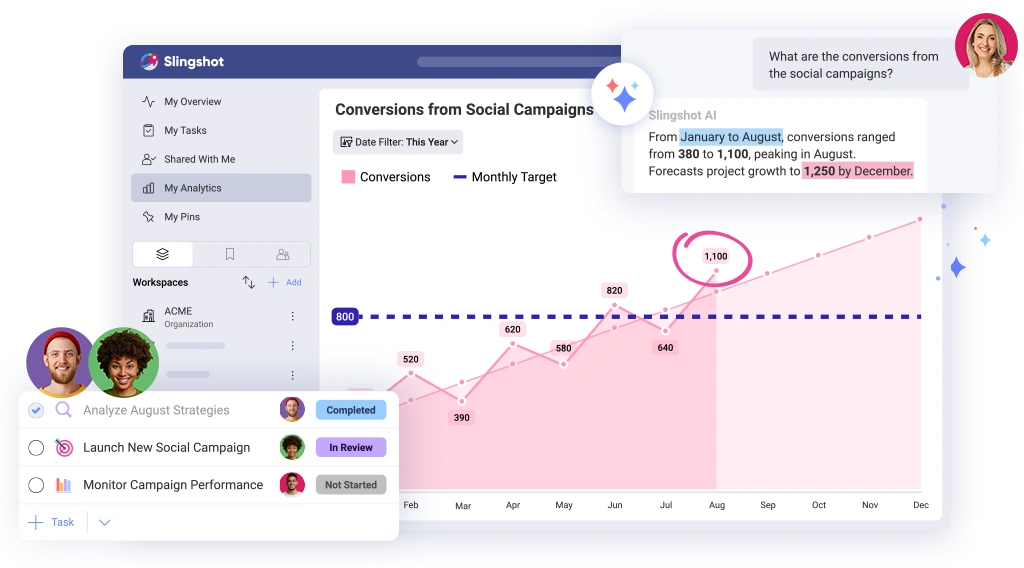
Aquí es donde la mayoría de los sistemas de reportes se rompen. Ves una caída en el pipeline. Entonces, ¿qué? Hilo de Slack. Tablero de tareas separado. Reunión de seguimiento. Desconectados.
Cuando los reportes se conectan directamente con la ejecución:
Ahora los cambios de desempeño conducen a la acción, — no a la confusión.

Los reportes ejecutivos no deberían variar de una reunión a otra.
Debería incluir:
Los tableros ejecutivos de marketing bien estructurados generan confianza porque el liderazgo ve el mismo formato, cada vez. La consistencia genera credibilidad.

Cuando los reportes están fragmentados, las reuniones se sienten adversariales. Cuando los reportes están unificados, las reuniones se sienten estratégicas.
Ese cambio transforma tu papel en la sala. Ya no estás explicando. Estás asesorando.
Una estrategia de reportes de marketing define cómo se mide, se estandariza y se presenta el desempeño al liderazgo. Incluye definiciones de KPI, lógica de atribución, fuentes de datos y la estructura del tablero ejecutivo para asegurar reportes consistentes y defensibles.
Si sientes que estás defendiendo tus números en cada reunión ejecutiva, el problema no es tu desempeño. Es el sistema de reportes detrás de él. Pasa a un modelo de reportes unificado, y cambia la conversación de defensa a estrategia.

 Return to Blog

 ChatGPT
 Perplexity