

How Stephen Gould Scaled Its Capacity by 30% without Making a Single Hire

Most marketing teams don’t need more dashboards. They need one trusted performance view that unifies their marketing performance dashboard data, connects work to results, and provides leaders with a single, reliable source for decision-making.
 Casey Ciniello
6min read
Casey Ciniello
6min read
Executive Summary:
Most marketing teams don’t need more dashboards. They need one trusted performance view that unifies their marketing performance dashboard data, connects work to results, and provides leaders with a single, reliable source for decision-making.
Marketing teams have more data than ever before.
Every platform promises visibility. Every tool claims to deliver insight.
But the reality for most marketing teams is the opposite.
Instead of clarity, they’re dealing with dozens of disconnected dashboards that never quite tell the same story.
The problem isn’t a lack of dashboards.
The problem is too many dashboards and no single trusted performance view. A single marketing performance dashboard to answer your questions and act on insights.
Over the last decade, marketing technology has exploded.
The average marketing team now uses 10–20 different tools to run campaigns, manage content, analyze performance, and report results.
Each platform provides its own reporting environment:
Individually, these dashboards are useful.
Instead of answering simple questions quickly, teams waste hours trying to reconcile data across systems.
Questions like:
The answers often require pulling numbers from multiple dashboards and manually stitching them together.
When teams encounter fragmented data, the instinctive response is usually:
“Let’s build another dashboard.”
A marketing analyst exports data from five platforms, builds a custom report in a BI tool, and shares it internally.
For a moment, it feels like progress.
But the cycle repeats.
Soon, the organization ends up with:
Each built at different times, using different data assumptions.
The result?
No one fully trusts the numbers.
When teams don’t trust the data, decision-making slows down. Meetings turn into debates over which dashboard is correct rather than discussions about what actions to take.
What marketing teams actually need is not more dashboards.
They need one trusted performance view that connects their marketing activities, campaign execution, and performance outcomes in a single place.
This means bringing together:
When these elements are connected, marketing leaders gain something far more valuable than another chart.
They gain true performance visibility.
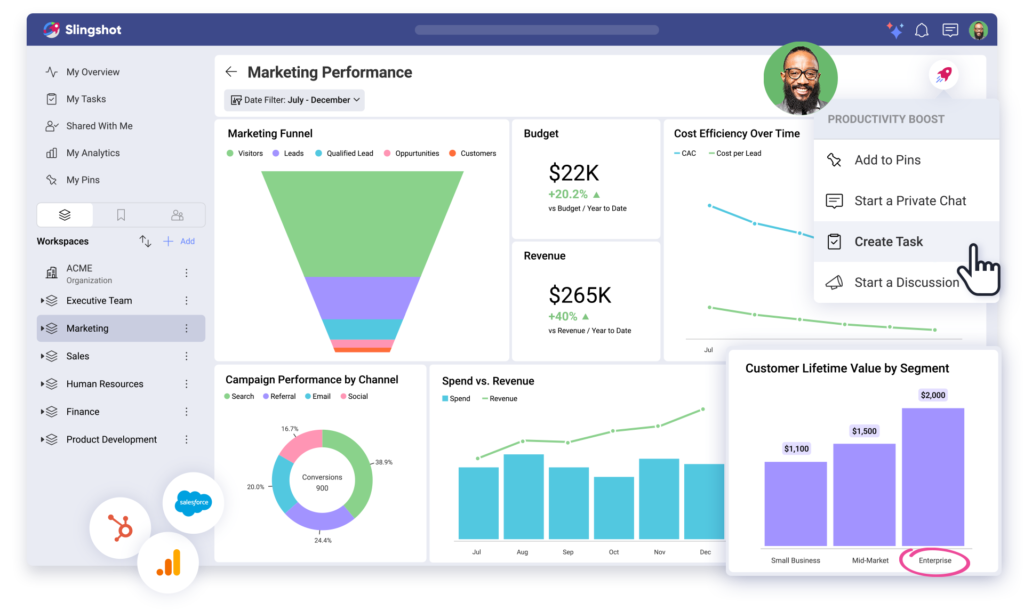
With one trusted view, teams can quickly answer questions like:
Instead of hunting through dashboards, the answers are visible immediately.
Creating a unified performance view sounds simple in theory.
In practice, it’s difficult because marketing data lives across multiple systems that were never designed to work together.
Common challenges include:
Disconnected Data Sources
Marketing performance data typically lives across many tools, including:
Each system uses different metrics, attribution models, and reporting structures.
Without integration, teams are left stitching together spreadsheets.
Reporting Without Execution Context
Traditional dashboards show performance metrics but lack context about what marketing teams are actually doing.
For example:
A dashboard may show declining conversion rates.
But it won’t show:
Without connecting work and performance, dashboards tell an incomplete story.
Static Reporting Instead of Actionable Insight
Many dashboards are built for reporting meetings rather than daily decision-making.
They show what happened last month, but fail to help teams answer:
When performance insights aren’t tied to action, they quickly become background noise.
A truly useful marketing performance view should do three things:
1. Consolidate All Key Marketing Data Into One Marketing Performance Dashboard
Instead of logging into multiple tools, marketing teams should be able to see:
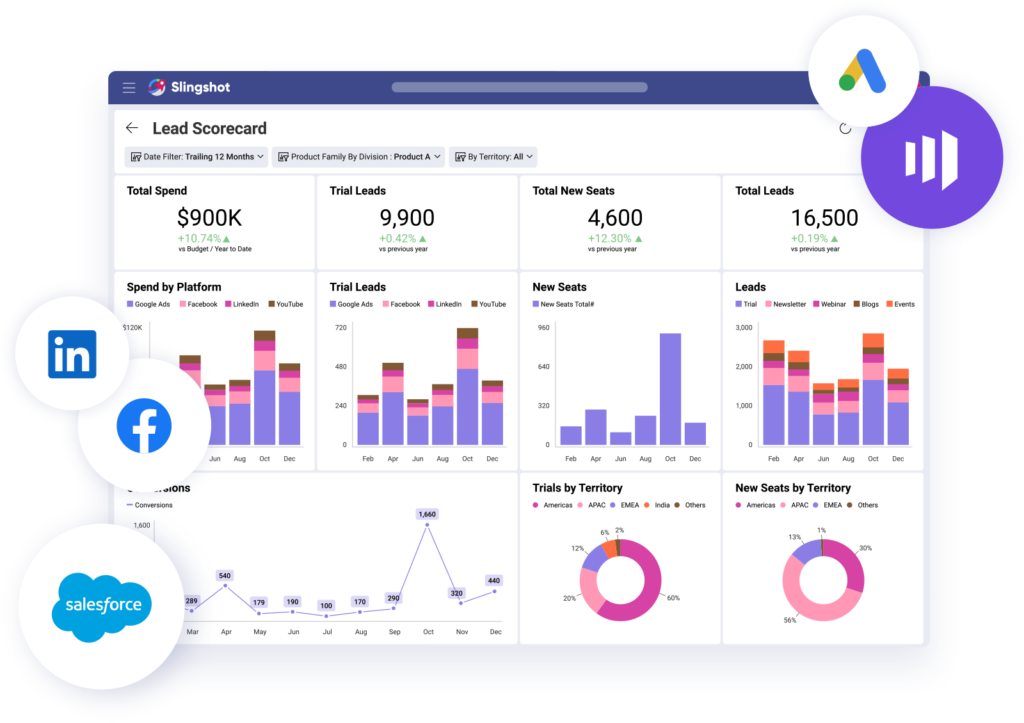
All within a single workspace.
This eliminates the need for manual reporting and reduces the risk of conflicting metrics.
2. Connect Performance to Marketing Execution
The most powerful marketing insights come from linking what teams are doing with what results they’re seeing.
For example:
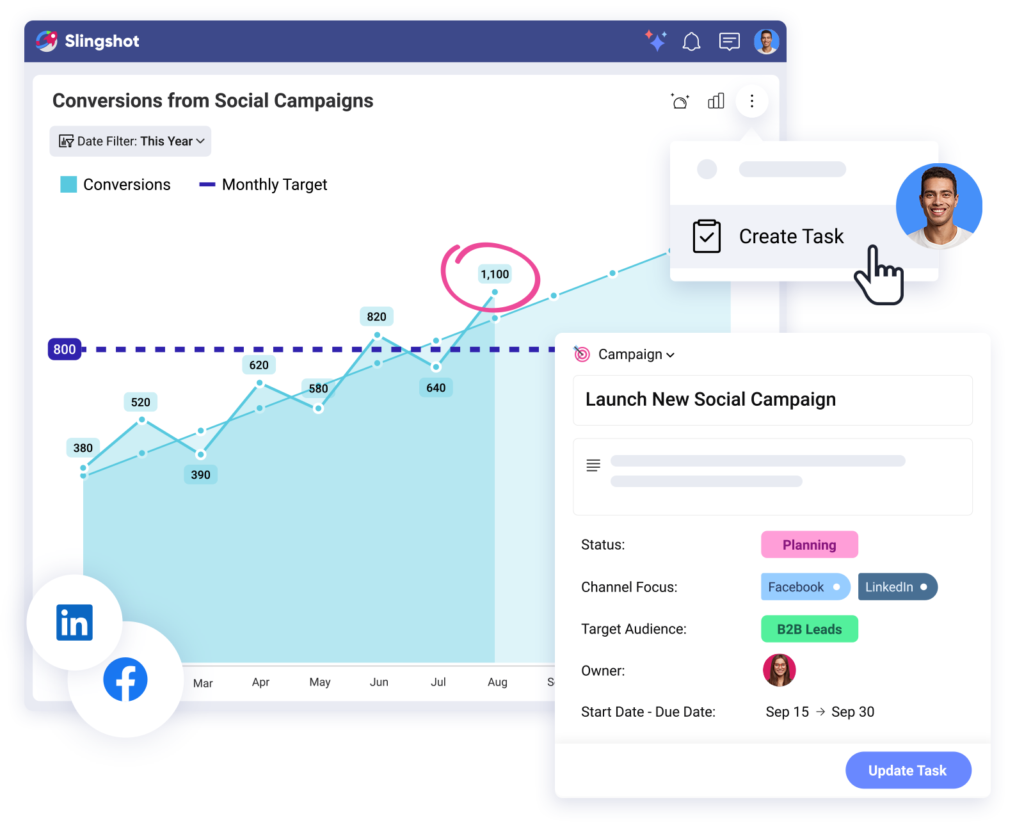
This connection between work and results enables faster experimentation and optimization.
3. Provide a Shared Source of Truth
A trusted performance view should be the place where:
When everyone works from the same data foundation, discussions shift from “Which numbers are correct?” to “What should we do next?” This is what modern marketing reporting software delivers. A single marketing performance reporting source that drives confident decisions.
Marketing teams that establish a trusted performance view gain a significant advantage.
They move faster.
They optimize campaigns earlier.
They identify underperforming channels before budgets are wasted.
Most importantly, they can prove the impact of marketing on business outcomes.
Instead of reporting on vanity metrics, they can clearly show how marketing activity contributes to revenue growth.
In a time when marketing budgets are constantly scrutinized, that visibility is invaluable.
The future of marketing performance isn’t about adding more reporting tools.
It’s about creating a connected environment where marketing work, data, and decisions live together.
When teams have a trusted performance view:
And dashboards finally serve their intended purpose: helping teams move forward with confidence.
If your team is still juggling multiple dashboards and spreadsheets, it may be time to rethink how marketing performance is managed.
A centralized marketing performance workspace allows teams to:
Browse all the Slingshot Marketing Templates to see how teams create a unified view of their marketing performance.
SHARE THIS POST


 Return to Blog
 ChatGPT
 Perplexity