Cómo Stephen Gould escaló su capacidad un 30 % sin realizar una sola contratación

Biblioteca de plantillas
 Casey Ciniello 7min read
 Executive Summary:
Al principio, la conversación se centró en la visibilidad. Paneles. Informes de campañas. Modelos de atribución. El objetivo era mostrar actividad e interacción.
Pero las expectativas de los ejecutivos han cambiado.
Hoy, el liderazgo no pregunta cuántas campañas se lanzaron o cuántos clientes potenciales se generaron. Hace una pregunta mucho más difícil:
¿Cómo está contribuyendo el marketing a los ingresos?
Ese cambio es lo que dio origen al concepto de marketing imputable a ingresos.
Sin embargo, a pesar de que la frase se ha vuelto popular, muchas organizaciones aún luchan por implementarla. Los equipos de marketing continúan rastreando el desempeño en sistemas fragmentados, confiando en paneles desconectados e informes manuales para explicar sus resultados.
Comprender cómo se ve realmente el marketing imputable a ingresos requiere ir más allá de los informes y entender cómo se estructuran las operaciones de marketing y cómo se implementa una verdadera estrategia de marketing orientada a ingresos.
Los modelos tradicionales de desempeño de marketing se construyeron alrededor de métricas de actividad.
Las medidas comunes incluían:
Estas métricas ayudaron a los equipos de marketing a medir la productividad, pero no explicaban completamente el impacto empresarial.
A medida que los negocios de SaaS y basados en suscripción crecieron, el liderazgo comenzó a evaluar el marketing de manera diferente.
En lugar de métricas de actividad, las organizaciones comenzaron a hacer preguntas como:
Responder estas preguntas requiere conectar la actividad de marketing al motor de ingresos. Esa es la base del marketing imputable a ingresos y un modelo más significativo de responsabilidad de marketing vinculado directamente a pipeline e ingresos.
Muchos equipos de marketing aún se basan en métricas que se quedan cortas en cuanto a información de ingresos.
Por ejemplo:
Esto crea un problema común durante los informes ejecutivos.
Los líderes de marketing presentan paneles que muestran tráfico, conversiones e interacción de campañas. Pero el liderazgo hace una pregunta completamente diferente:
¿Cómo impactó el marketing los ingresos en este trimestre?
Sin un sistema claro que conecte la actividad de marketing a pipeline e ingresos, la respuesta a menudo requiere informes manuales, referencias cruzadas de datos de CRM y creación de diapositivas antes de las reuniones de liderazgo.
Este proceso es lento, frágil y difícil de escalar.
El marketing imputable a ingresos requiere un sistema más estructurado que haga que la contribución de marketing a pipeline sea visible en tiempo real, no solo al final del trimestre.
Muchos equipos intentan cerrar la brecha con informes manuales en hojas de cálculo o construcciones de informes puntuales, como crear una plantilla de panel de KPI de marketing en una herramienta de BI. Sin embargo, esos artefactos aún se encuentran fuera del motor de ingresos real y rápidamente quedan obsoletos.
El marketing imputable a ingresos no es simplemente un mejor informe.
Es un modelo operativo diferente.
Los equipos de marketing de SaaS de alto desempeño típicamente comparten cinco características.
1. La contribución al pipeline es una métrica central de marketing
En las organizaciones imputables a ingresos, el desempeño del marketing se evalúa por su influencia en la creación de pipeline e ingresos.
Los paneles de marketing rastrean:
Esto permite al liderazgo ver cómo los programas de marketing impactan el pipeline de ventas, haciendo que la responsabilidad del pipeline de marketing sea una lente principal para las conversaciones de desempeño.
2. Los datos de marketing y ventas están conectados
La responsabilidad de ingresos requiere una vista compartida del viaje del cliente.
La actividad de marketing, los datos de CRM y la información del pipeline de ventas deben funcionar juntos. Sin integración entre estos sistemas, el desempeño del marketing se fragmenta.
Muchas organizaciones intentan cerrar esta brecha usando hojas de cálculo o informes manuales. Sin embargo, este enfoque a menudo conduce a inconsistencias en los números del pipeline y la lógica de atribución.
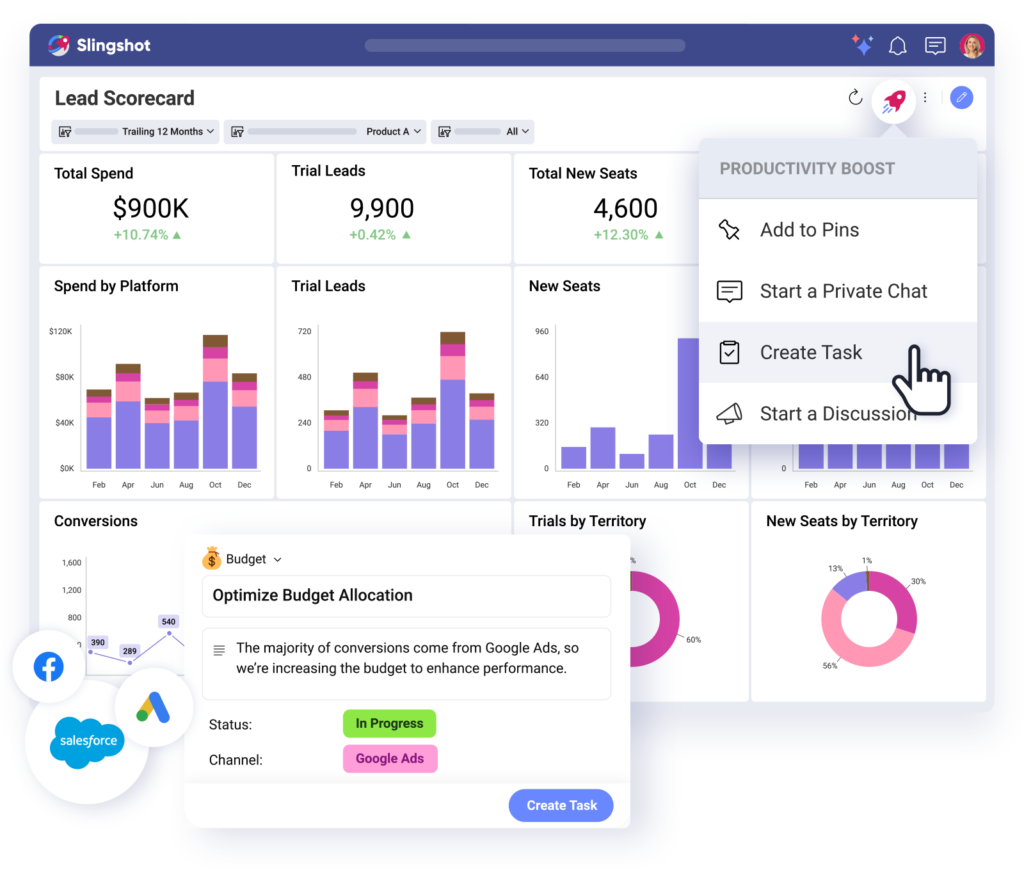
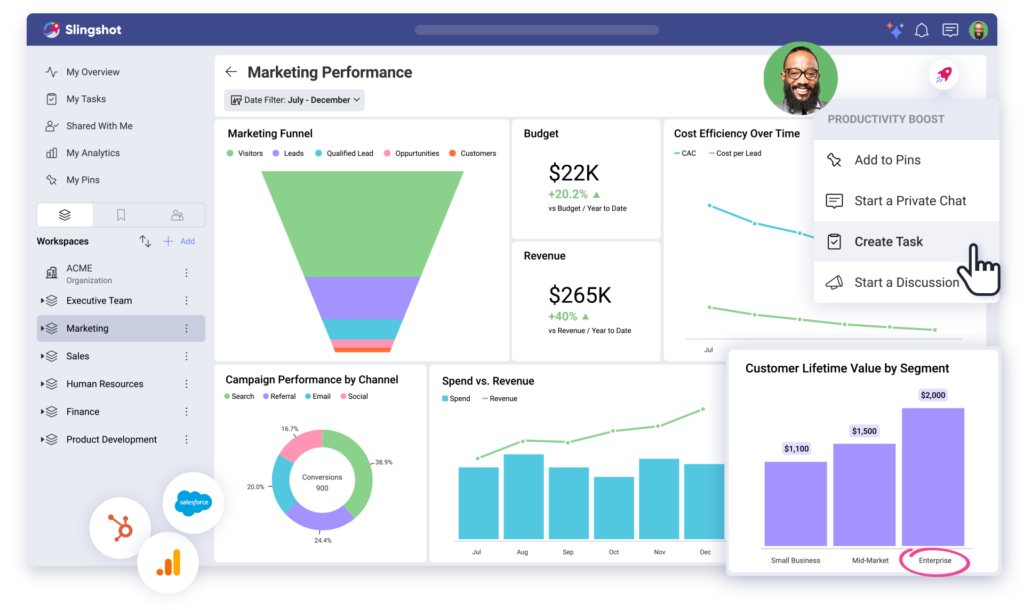
Una plataforma de análisis de marketing unificada como Slingshot permite alinear la actividad de marketing con los resultados de ventas en una única vista. Define reglas consistentes sobre cómo el marketing contribuye al pipeline y lo mide.
3. El desempeño de marketing se revisa continuamente
El marketing imputable a ingresos no se limita a informes mensuales. Los equipos de alto desempeño monitorean el desempeño del marketing continuamente.
Las revisiones de desempeño semanales a menudo se enfocan en preguntas como:

Este ritmo operativo permite a los equipos de marketing ajustarse rápidamente en lugar de reaccionar después de que los problemas de desempeño se vuelvan visibles, convirtiendo el marketing imputable a ingresos de un ejercicio de informe en un cadencia operativa continua.
4. Los conocimientos de desempeño se conectan directamente a la ejecución
Muchas organizaciones de marketing rastrean el desempeño en paneles pero administran la ejecución en otro lugar.
Por ejemplo:
Las plataformas de análisis muestran métricas de desempeño, pero la ejecución de campañas vive en herramientas de gestión de proyectos.
Esta separación crea un retraso entre la idea y la acción.
Los equipos imputables a ingresos cierran esa brecha.
Cuando las señales de desempeño cambian, los equipos asignan rápidamente acciones de seguimiento:
Conectar los conocimientos directamente a la ejecución ayuda a los equipos a responder más rápidamente a las tendencias de desempeño y lleva la estrategia, planificación y desempeño de marketing de ingresos a un solo ciclo.
5. El liderazgo de marketing puede explicar claramente el desempeño
Uno de los indicadores más claros de responsabilidad de ingresos es con qué facilidad los líderes de marketing pueden explicar el desempeño a los ejecutivos.
En organizaciones maduras, los líderes de marketing pueden responder rápidamente a preguntas como:
En lugar de reconstruir informes antes de cada reunión de liderazgo, los equipos se basan en sistemas de desempeño de confianza.
Esto mejora la confianza en los resultados de marketing y fortalece la alineación entre marketing y liderazgo ejecutivo porque cada conversación comienza desde una vista compartida y de confianza del impacto del marketing en pipeline e ingresos.
Muchas empresas asumen que la responsabilidad de ingresos es principalmente un desafío de informes. Invierten en paneles o herramientas de análisis, esperando que una mayor visibilidad resuelva el problema.
Sin embargo, los paneles solos no crean responsabilidad. Simplemente visualizan datos.
Sin una estructura operativa, los paneles aún pueden dejar a los equipos preguntándose:
El marketing imputable a ingresos requiere integrar datos, ejecución y propiedad en un único sistema operativo en lugar de empalmar una serie de informes y herramientas aisladas.
Las organizaciones que tienen éxito con el marketing imputable a ingresos típicamente construyen sistemas que combinan tres elementos:
Visibilidad de desempeño
Los equipos de marketing necesitan acceso confiable a métricas de pipeline e ingresos. Esto significa conectar sistemas de origen central, CRM, automatización de marketing, plataformas de anuncios y datos de productos en una única vista que refleje cómo el marketing realmente impulsa oportunidades e ingresos.
Flujos de trabajo operativos
La actividad de marketing, la planificación de campañas y el trabajo de optimización deben coordinarse en todo el equipo.
Propiedad clara
Cada iniciativa debe tener una responsabilidad definida y resultados medibles, de modo que el mismo sistema que surfacía los conocimientos también pueda administrar experimentos, campañas y acciones de seguimiento.
Cuando estos componentes están conectados, el desempeño del marketing se vuelve más fácil de entender y mejorar.
En lugar de reaccionar a problemas de desempeño después de que ocurran, los equipos pueden identificar tendencias más temprano y responder con acción coordinada basada en una estrategia clara de marketing de ingresos y responsabilidad compartida por el pipeline.
La mayoría de los equipos intentan armar este sistema desde múltiples herramientas: análisis, hojas de cálculo, gestión de proyectos y vistas de CRM, lo que conduce a los desafíos de informes de pipeline que muchos líderes de marketing reconocen: números conflictivos, análisis ad hoc lento y preparación que requiere mucho tiempo antes de cada reunión ejecutiva.
Una plataforma como Slingshot trae visibilidad de desempeño, flujos de trabajo operativos y propiedad a un solo lugar, de modo que los líderes de marketing puedan ver el impacto de pipeline e ingresos, priorizar el trabajo y rastrear resultados sin saltar entre sistemas desconectados.
Si está comenzando este viaje, un punto de partida práctico es definir el puñado de métricas que importan más para el marketing imputable a ingresos (como pipeline originado por marketing, pipeline influenciado y velocidad de conversión), luego configure una plantilla de panel de KPI de marketing alrededor de esas métricas en un sistema que también admita planificación y ejecución de campañas.
A medida que los negocios de SaaS continúan escalándose, las expectativas de marketing solo aumentarán. Los ejecutivos quieren claridad sobre cómo las inversiones de marketing se traducen en crecimiento de pipeline e ingresos.
Los equipos de marketing que se basan en sistemas de informes desconectados tendrán dificultades para proporcionar esa claridad.
Aquellos que adopten modelos de marketing imputables a ingresos podrán conectar la estrategia, ejecución y desempeño en un único sistema medible donde la responsabilidad del pipeline de marketing se integra en cómo el equipo planifica, informa y toma decisiones cada semana.
El resultado es una organización de marketing que no solo impulsa el crecimiento sino que puede demostrar claramente cómo sucede y prueba, con confianza, exactamente cómo el marketing contribuye a pipeline e ingresos.
Slingshot está construido para admitir ese modelo: proporcionando a los líderes de marketing una plataforma de análisis de marketing unificada, paneles de KPI compartidos y un espacio de trabajo de ejecución que vincula cada programa al impacto de pipeline e ingresos.


 Return to Blog

 ChatGPT
 Perplexity