

How Stephen Gould Scaled Its Capacity by 30% without Making a Single Hire

Most SaaS marketing teams struggle with execution. Learn how to build an operating model that connects strategy, workflows, and performance.
 Casey Ciniello
12min read
Casey Ciniello
12min read
Executive Summary:
SaaS marketing teams don’t struggle with ideas. They struggle with consistency. One campaign performs well. The next underperforms.
Another shows promise but takes too long to optimize. The results feel unpredictable. Not because teams lack strategy. But because they lack a system.
SaaS marketing performance isn’t driven by campaigns alone. The marketing performance operating model behind them drives it.
A marketing performance operating model defines how your team connects strategy, execution, and performance into a single, repeatable system. Without it, even strong campaigns fail to scale.
Most SaaS teams approach marketing as a series of campaigns.
Plan → launch → analyze → repeat.
On the surface, that sounds structured.
But in reality, it creates fragmentation.
Each campaign is treated as its own initiative:
There’s little continuity between efforts.
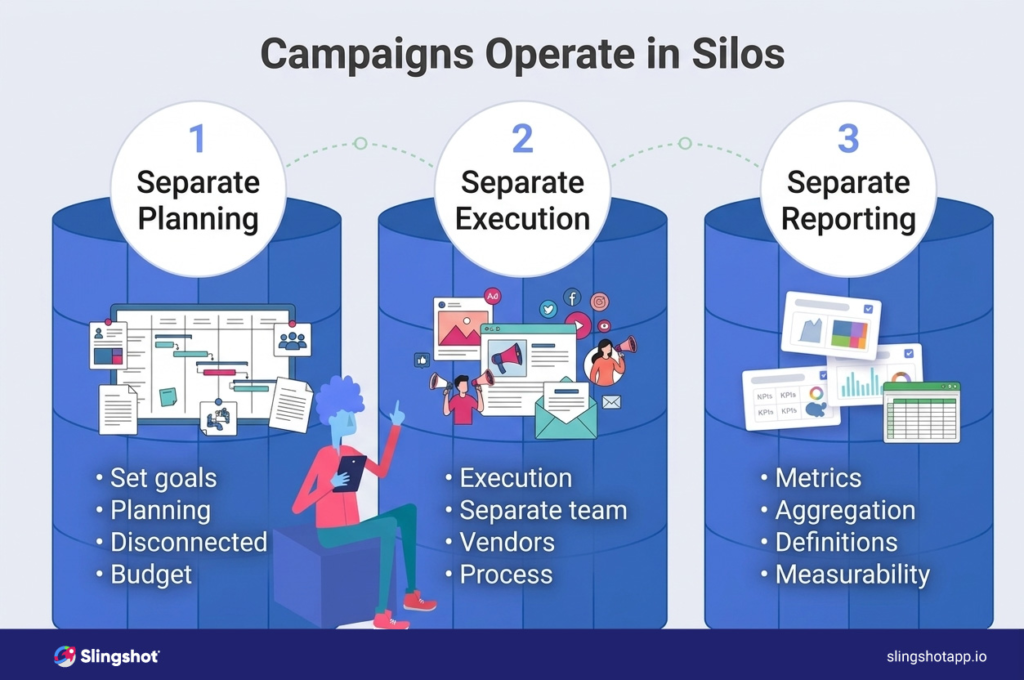
So teams aren’t building momentum; they’re starting over every time. This is where most SaaS marketing operating models break down. Instead of compounding performance, teams reset context with every new campaign. Learning stays isolated. Execution varies. Results fluctuate.
Most teams review performance after the fact:
By the time insights are identified, opportunities are already lost. This reactive approach slows down marketing performance management. You’re making decisions based on outdated data instead of live signals.
Campaign execution happens in one place.
Performance data lives in another.
There’s no real-time connection between:
This disconnect is the root issue in most marketing analytics workflows. Data exists, but it does not influence execution when it matters.
A marketing performance operating model is the system that defines how your team:
It’s not a tool. It’s not a framework on a slide.
It’s how your team actually operates day to day.
Think of it as your marketing execution framework. It connects every stage of work, so nothing operates in isolation.
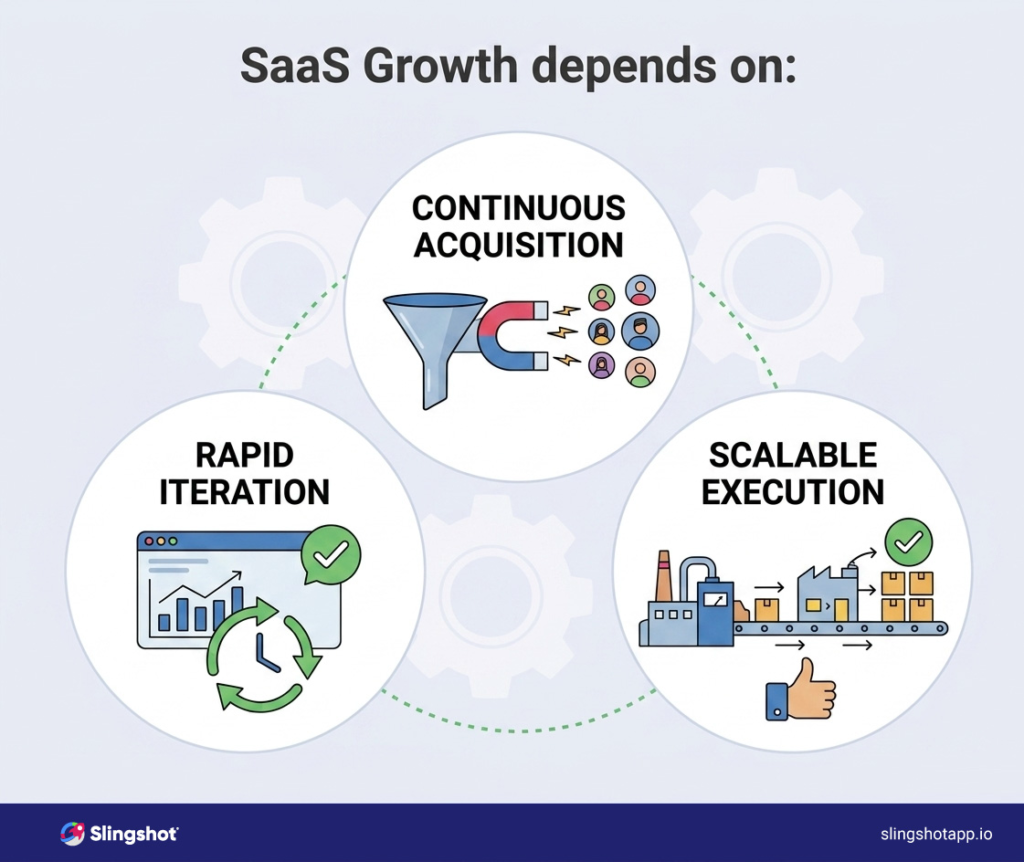
SaaS growth depends on:
Without a defined operating model:
The marketing performance operating model is what turns effort into results.
It also enables campaign performance management at scale. Instead of guessing what works, your team can systematically improve results over time.
To drive consistent performance, SaaS teams need four connected components:
This is where campaigns and priorities are defined:
But planning alone isn’t enough. It needs to feed directly into execution.
In a strong SaaS marketing operating model, planning is not static. It evolves based on performance data. Teams revisit assumptions, refine targeting, and adjust priorities continuously.
For example: If paid acquisition costs rise, your planning layer should immediately shift budget toward higher-performing channels or segments.
Every campaign should follow a structured workflow:
Execution should be:
This is where most marketing execution frameworks fail. Work happens, but it is not standardized. Each campaign runs differently depending on the team or timeline.
Strong execution workflows remove variability. They define how campaigns move from idea to launch with consistency.
Example workflow:
Using a centralized system like Slingshot allows teams to manage these workflows in one place rather than across disconnected tools.
Performance data should be:
Teams should always know:
This is the foundation of marketing performance tracking. Without visibility, optimization becomes guesswork.
High-performing teams build dashboards that tie directly to campaigns. They do not rely on static reports. They monitor performance as it happens.
Example metrics:
When performance tracking is integrated into your marketing operations system, every decision becomes data-driven.
This is where most teams fall short.
Insights need to drive action immediately.
Not next month.
Not next quarter.
But within the same workflow.
Performance → action → optimization → improvement
This is the core of an effective marketing analytics workflow. Data should not just inform reporting. It should trigger execution.
Example:
Without feedback loops, your marketing performance operating model breaks. With them, it compounds.
The best SaaS marketing teams don’t just run campaigns.
They run systems.
Not just in reports, but in real time.
They see performance as it happens and adjust accordingly. This allows them to catch issues early and capitalize on opportunities faster than competitors.
Insights are only valuable if they lead to action.
High-performing teams:
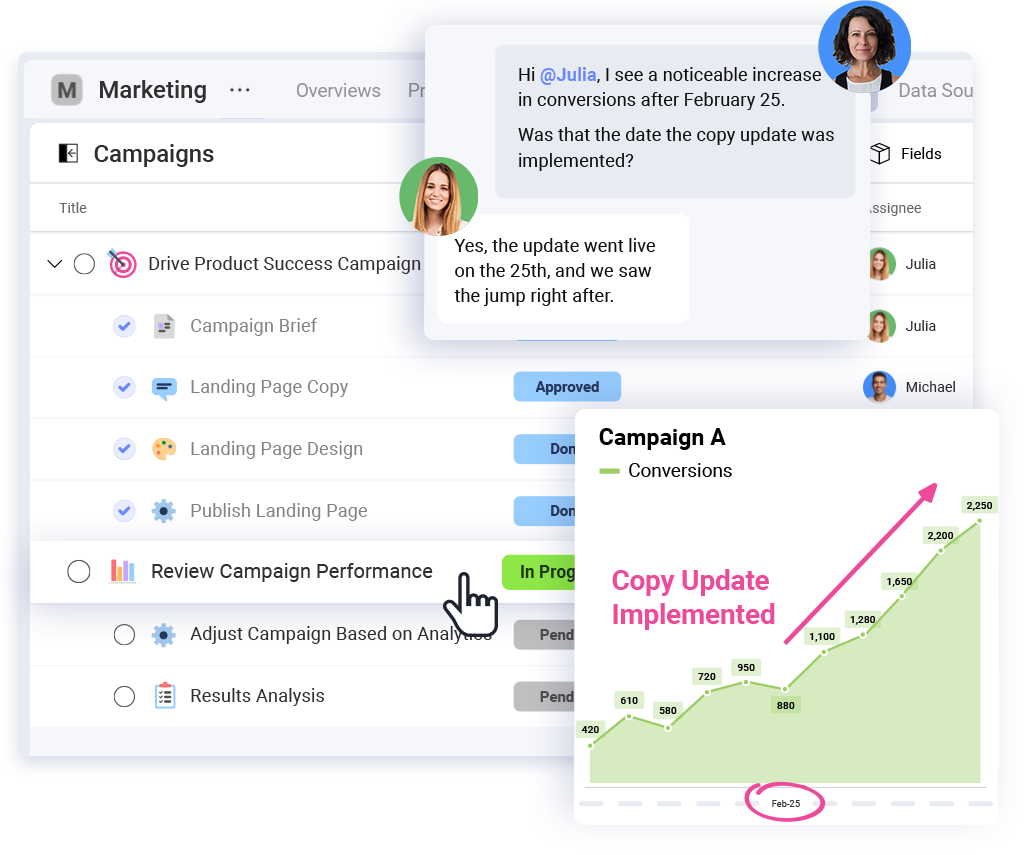
This is what separates strong campaign performance management from reactive marketing. Decisions happen inside the workflow, not after it
There’s no gap between:
Everything lives in one connected system. This is the defining trait of a mature marketing operations system. Every function works from the same source of truth.
As a result, teams move faster, waste less budget, and scale what works more effectively.
If performance feels inconsistent, the solution isn’t more campaigns.
It’s a better system.
Bring planning, execution, and performance into one place, eliminating tool fragmentation.
Disconnected tools create delays and blind spots. A unified platform allows your team to move faster and make informed decisions. Explore a campaign management template to structure your work consistently.
Standardize how campaigns are executed.
Remove guesswork.
Increase speed.
Repeatable workflows are the backbone of any SaaS marketing operating model. They allow teams to scale without sacrificing quality
Ensure every team member can see:
Use dashboards to surface real-time insights. Visibility drives accountability and faster decisions.
Turn insights into action immediately.
Build a system where: data drives execution. Not just reporting
This is where most teams see the biggest improvement in marketing performance management. Speed of action directly impacts results.
SaaS marketing success isn’t about working harder.
It’s about operating smarter.
The teams that consistently outperform competitors don’t rely on:
They rely on a system that connects everything.
The marketing performance operating model enables consistent, scalable growth. It turns marketing from a series of disconnected efforts into a coordinated performance engine.
Slingshot gives SaaS marketing teams a single system to:
All in one place.
Instead of managing separate tools for project management, analytics, and reporting, you can run your entire marketing operations system on one platform because the teams that win aren’t the ones running the most campaigns.
A SaaS marketing performance operating model is a system that connects strategy, execution workflows, performance tracking, and feedback loops. It ensures marketing teams can act on data quickly and improve results continuously.
They’re the ones running the best system behind them.
Explore Slingshot templates and dashboards to start building your marketing performance operating model today.
A marketing strategy defines what you want to achieve, and which channels or audiences you will target. A marketing performance operating model defines how your team executes that strategy day to day. Strategy sets direction. The operating model drives execution, measurement, and continuous improvement.
A SaaS marketing operating model includes strategic planning, execution workflows, performance tracking, and feedback loops. These components work together to create a continuous system for marketing performance management, rather than isolated campaign execution.
Most teams lack a defined marketing execution framework. Common issues include unclear workflows, siloed tools, poor visibility into performance, and delayed decision-making. Without structure, execution becomes inconsistent and difficult to scale.
A marketing performance operating model improves ROI by identifying underperforming campaigns faster, reallocating budget in real time, scaling high-performing channels, and reducing wasted spend. By connecting execution to data, teams make better decisions and continuously improve results.
Teams need a unified platform that combines project management, collaboration, and performance tracking. A connected marketing operations system replaces fragmented tools, improving speed, visibility, and results.
Data is central to a marketing performance operating model. It enables teams to track performance in real time, identify trends and issues, inform campaign optimization, and guide future planning. Without integrated data, marketing analytics workflows fail to influence execution.
Effective marketing performance tracking focuses on campaign-level metrics such as CPA and conversion rate, channel performance, pipeline contribution, and revenue impact. The key is connecting these metrics directly to execution so teams can act on them quickly.
Yes. Smaller teams often benefit the most. A clear marketing performance operating model helps small teams prioritize work, execute consistently, maximize limited resources, and scale what works faster.
Implementation time depends on team size and complexity. Most teams can define workflows within weeks, centralize tools within a month, and begin optimizing performance immediately. The biggest gains come from improving visibility and speed of execution early.
You likely need a marketing operations system if campaign performance is inconsistent, data is spread across multiple tools, teams rely on manual reporting, or optimization happens too late. These issues indicate a lack of a connected marketing performance operating model.
Slingshot supports a marketing performance operating model by combining campaign planning, execution workflows, real-time dashboards, and performance tracking. This allows teams to manage their entire marketing operations system in one place and act on insights without delay.
SHARE THIS POST



 Return to Blog
 ChatGPT
 Perplexity