

How Stephen Gould Scaled Its Capacity by 30% without Making a Single Hire

Marketing teams don’t lack data — they lack action. Here’s how high-performing teams turn metrics into movement.
 Casey Ciniello
6min read
Casey Ciniello
6min read
Executive Summary:
Most marketing performance metrics don’t have a data problem; they have an action problem. Your team tracks clicks, conversions, and cost per acquisition. But tracking and responding are two very different things.
Reports get reviewed. Dashboards get shared. Insights get discussed. But meaningful marketing campaign optimization, actually changing something, often comes weeks later, if at all. The challenge is what happens next.
Too often, marketing metrics are observed rather than acted on. Reports are reviewed, dashboards are shared, and insights are discussed, but meaningful changes to campaigns or strategy come much later.
The difference between average marketing teams and high-performing ones isn’t access to data. It’s how quickly they turn metrics into movement.
Most marketing organizations have become excellent at measuring performance. Teams track campaign results across channels and produce detailed reports that show how marketing activity is performing over time.
But tracking metrics alone does not improve performance.
Consider a common scenario. A demand generation team notices that the cost per lead has increased over the past two weeks. Conversion rates on landing pages have declined slightly, and engagement on recent campaigns appears lower than expected.
The data clearly shows that something has shifted.
Yet the response often unfolds slowly:
By the time adjustments are made, weeks may have passed. Marketing performance doesn’t suffer because teams lack metrics. It suffers because responses to performance shifts are delayed.
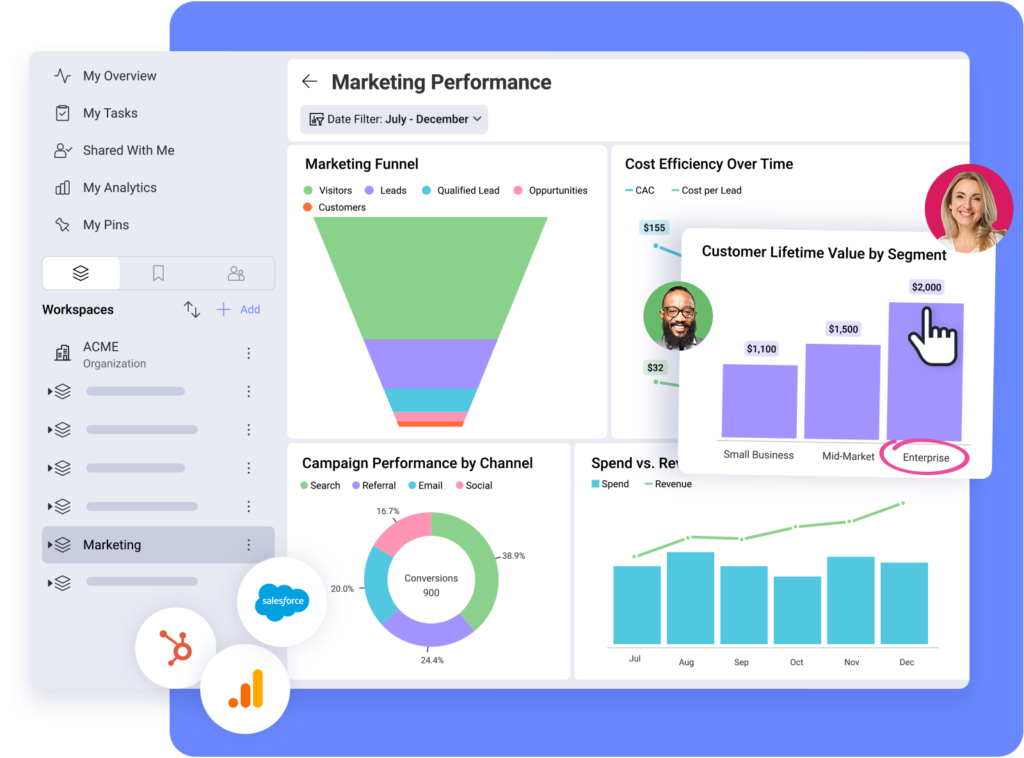
These changes may seem insignificant in isolation, but over time they compound. When teams rely on periodic reporting cycles, weekly meetings, or monthly dashboards, they often detect performance changes later than they should.
High-performing marketing teams treat marketing performance analysis not as static reports, but as signals that trigger investigation and action.
Another reason marketing teams struggle to respond quickly to performance changes is the separation between analytics tools and marketing workflows. In many organizations, these systems live in entirely different environments.
Because these systems are disconnected, teams must manually translate insights into operational changes. For example, a dashboard might show declining ad performance. But acting on that insight requires several additional steps:
Each step introduces a delay. And when responses take too long, performance opportunities are lost.
The most effective marketing teams treat performance monitoring as an active process rather than a passive one. Instead of waiting for reporting cycles, they build systems that connect data, allowing them to detect, interpret, and respond to performance shifts quickly.
Platforms like Slingshot’s marketing analytics solution are built specifically for this: connecting your data layer to your work layer so nothing gets lost between insight and action.
Three characteristics consistently define these teams.
Continuous Performance Visibility
High-performing teams maintain ongoing visibility into key marketing metrics.
Rather than reviewing performance only during scheduled reporting meetings, they monitor indicators such as:
When these metrics change, teams can detect the shift immediately, allowing them to investigate before it significantly impacts results.
Context Around Marketing Activity
Detecting a performance shift is only useful if teams can quickly understand what might have caused it.
High-performing teams analyze metrics alongside the marketing activities happening at the same time.
They examine factors such as:
This context allows them to quickly identify likely causes behind performance changes.
Immediate Operational Response
The final step and the one that separates high-performing teams from the rest is action.
When performance signals appear, effective marketing teams move quickly.
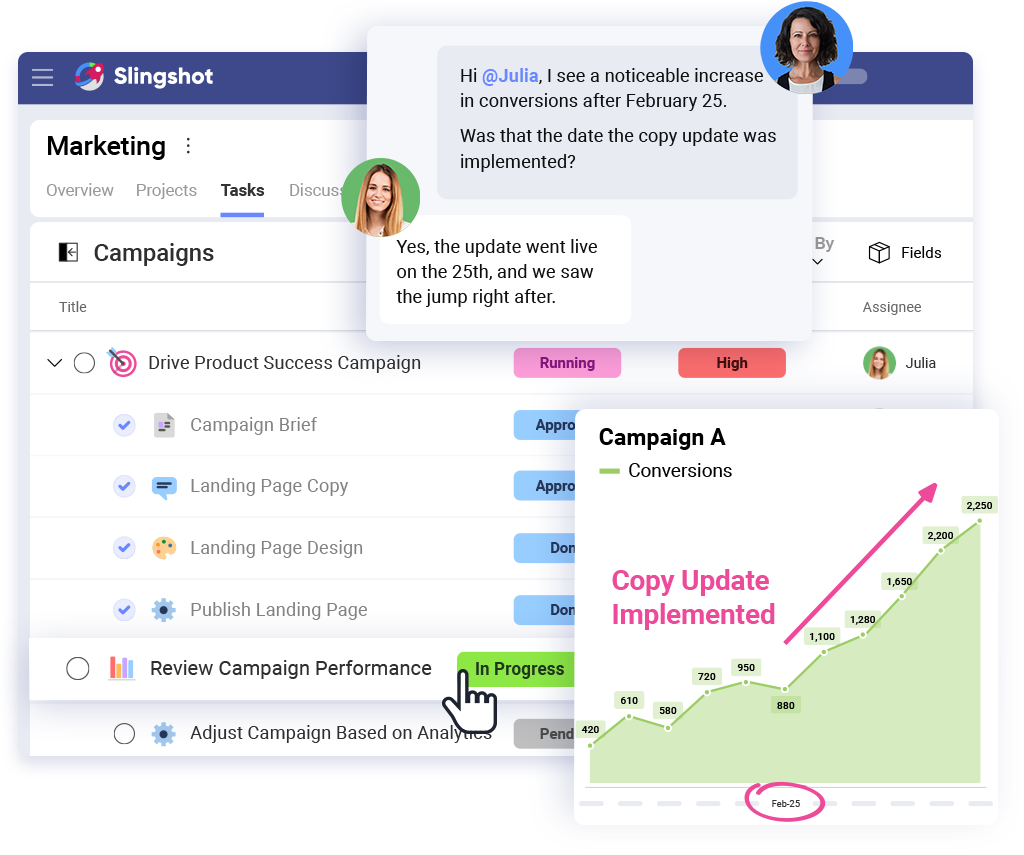
They might:
These adjustments happen quickly because the insights that trigger them are directly connected to marketing workflows.
To consistently turn metrics into movement, marketing teams need a structured response system with three core elements.
The most effective marketing organizations operate in a constant cycle of improvement. Performance data reveals opportunities. Teams respond with adjustments. New performance data shows the impact of those changes. The cycle repeats continuously.
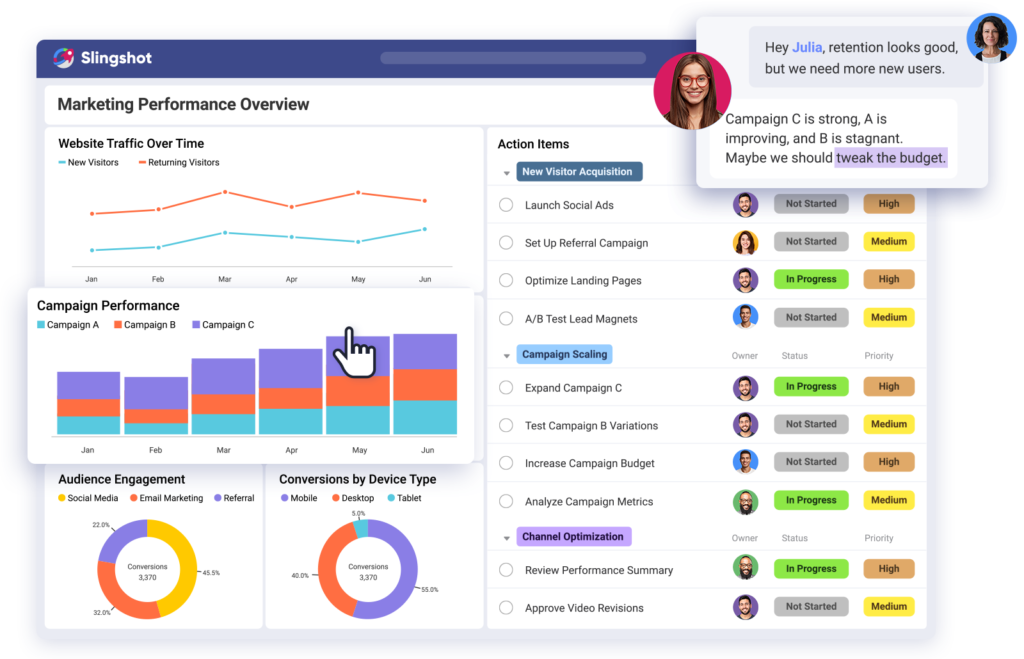
Instead of waiting for quarterly reporting reviews, these teams optimize campaigns weekly — sometimes daily.
Consistently making small improvements leads to significantly stronger marketing performance management over time.
Today, marketing teams have access to more data than ever before. But the presence of metrics alone does not improve outcomes. What truly matters is how quickly teams respond when performance changes.
When marketing organizations create systems that connect insights with action, metrics stop being passive reports. They become the signals that guide continuous growth.
If your team tracks marketing metrics but struggles to respond quickly to performance shifts, the issue may not be your analytics tools.
It may be the gap between insights and execution.
By connecting marketing data with the workflows that drive campaigns, teams can move from simply monitoring performance to actively improving it.
Explore how Slingshot helps marketing teams monitor performance, coordinate campaigns, and respond faster to performance shifts.
SHARE THIS POST



 Return to Blog
 ChatGPT
 Perplexity