

How Stephen Gould Scaled Its Capacity by 30% without Making a Single Hire

If your pipeline reports never match, the issue isn’t your CRM. It’s the gap between pipeline data and execution.
 Casey Ciniello
3min read
Casey Ciniello
3min read
Executive Summary:
Your Pipeline Numbers Don’t Match — And Everyone Notices
Your sales pipeline reports say one number. The CRM shows another. The forecast deck shows something else entirely.
And suddenly, the conversation shifts from performance to credibility.
Why don’t these numbers match?
Most teams assume it’s a data problem.
It’s not.
When pipeline reports don’t align, the first instinct is to blame the system:
But in most cases, the CRM is doing exactly what it’s supposed to do, store data.
The problem is everything happening around it.
Pipeline inconsistencies don’t come from one issue. They come from a system of small disconnects.
Execution Doesn’t Match the Data
Deals move fast, follow-ups happen outside the CRM, decisions happen in calls, updates get delayed.
By the time data is updated, it no longer reflects reality.
Teams that rely on a structured pipeline tracking system reduce this gap by connecting deal activity directly to pipeline updates.
Ownership Is Fragmented
Who owns the deal update? Who owns the next step?
Without clear ownership, pipeline data becomes inconsistent.
Forecasting Is Based on Static Snapshots
Most reports are backward-looking.
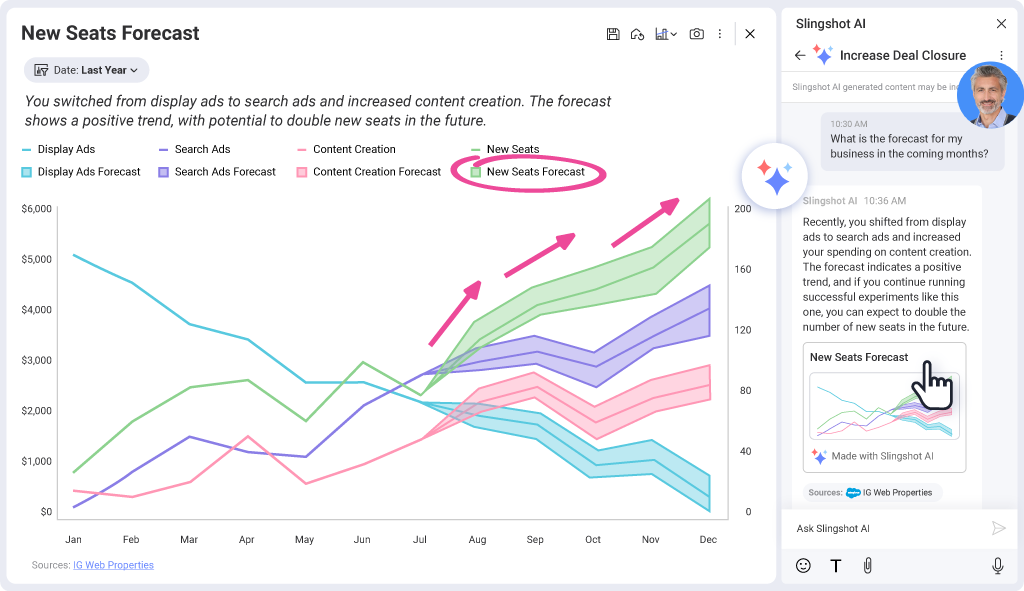
They don’t reflect:
Teams using a real-time revenue dashboard gain a clearer picture of pipeline health.
Data and Execution Are Separate
The CRM shows the status.
But it doesn’t show:
That disconnect is where inconsistencies start.
CRMs are systems of record.
They tell you what’s been entered.
They don’t tell you:
Without execution context, pipeline data becomes incomplete.
This isn’t just a reporting issue. It impacts performance.
Top-performing teams don’t rely on static pipeline reporting.
They connect pipeline data to execution.
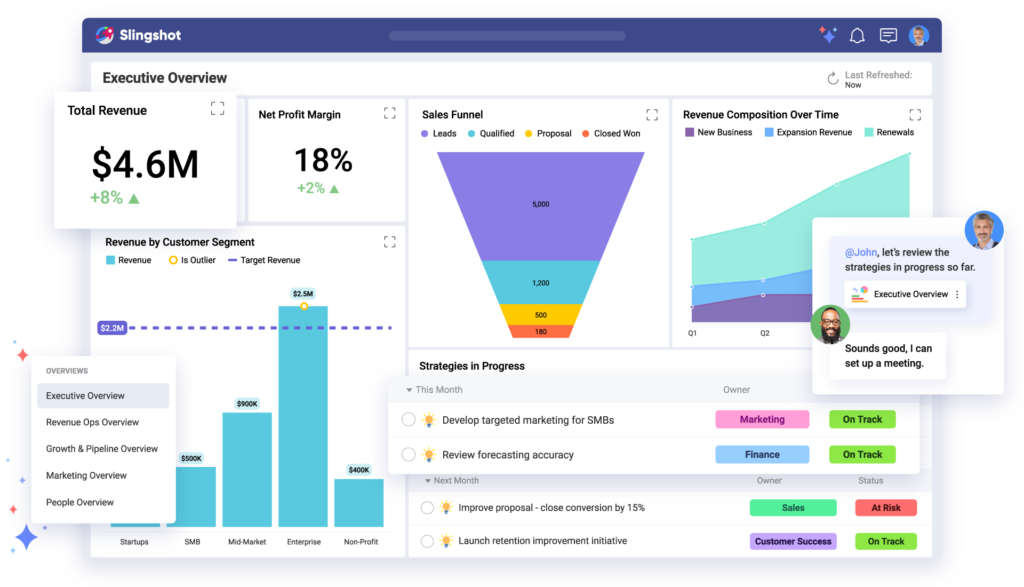
They:
They eliminate the gap between: Pipeline Data → Deal Execution
Fixing pipeline inconsistency doesn’t require replacing your CRM.
It requires connecting it to execution.
Systems like Slingshot bridge that gap by:
If your team is already working to improve how insights turn into action, this is the same challenge explored in From Campaign Insight to Campaign Action.
Your pipeline numbers don’t fail because your CRM is broken.
They fail because your system doesn’t connect:
The teams that fix this don’t just improve reporting.
They improve revenue performance.
See how Slingshot connects pipeline data to execution so your numbers — and your results — actually align.
SHARE THIS POST


 Return to Blog
 ChatGPT
 Perplexity