


 Return to Blog
SEO 워크플로우를 구축하는 방법: 실제로 실행되는
SEO 성공은 전략 수준에서 실패하지 않습니다. 실행 단계에서 실패합니다. 이 글에서는 콘텐츠 팀이 키워드 계획을 게시된 콘텐츠로 전환하는 데 어려움을 겪는 이유와 전략, 실행, 성능 추적 및 최적화를 반복 가능한 시스템으로 연결하는 구조화된 워크플로우를 설명합니다.
 Casey Ciniello 7min read
  ChatGPT
 Perplexity
Executive Summary:
SEO 성공은 전략 수준에서 실패하지 않습니다. 실행 단계에서 실패합니다. 이 글에서는 콘텐츠 팀이 키워드 계획을 게시된 콘텐츠로 전환하는 데 어려움을 겪는 이유와 전략, 실행, 성능 추적 및 최적화를 반복 가능한 시스템으로 연결하는 구조화된 워크플로우를 설명합니다.
Key Takeaways:
- * SEO 전략은 실행이 구조화되거나 추적되지 않으면 실패합니다. * 키워드는 할당 가능하고 추적 가능한 업무로 전환되어야 합니다. * 소유권과 기한은 일관된 결과물을 위해 중요합니다. * 성능 추적은 콘텐츠 실행과 직접 연결되어야 합니다. * 성과를 내는 팀은 반복 가능한 워크플로우 시스템 내에서 운영합니다. * SEO 성장은 계획이 아닌 지속적인 실행과 최적화에서 옵니다.
모든 SEO 계획은 처음에는 견고해 보입니다.
키워드 목록, 콘텐츠 아이디어, 그리고 트래픽을 늘려야 할 것이 명확합니다. 하지만 몇 주가 지나면 아무것도 출시되지 않았습니다.
문제는 계획이 아닙니다. 계획이 세워진 후에 일어나는 일입니다.
- 키워드가 식별됩니다.
- 기회가 매핑됩니다.
- 콘텐츠 아이디어가 정의됩니다.
그러면 모든 것이 느려집니다.
- 기한이 미뤄집니다.
- 우선순위가 변합니다.
- 업무가 손실됩니다.
SEO는 전략 수준에서 실패하지 않습니다. 실행 단계에서 실패합니다. 유기 트래픽을 늘리는 팀과 그렇지 않은 팀의 차이는 더 나은 아이디어가 아닙니다.
그것은 실제로 작업을 수행하는 SEO 워크플로우 프로세스를 가진 것입니다.
SEO 워크플로우가 실제로 무엇인지, 그리고 대부분의 팀이 왜 잘못 이해하는지
SEO 워크플로우는 다음이 아닙니다:
- 키워드 목록
- 콘텐츠 달력
- 블로그 아이디어 모음
이것들은 입력입니다.
실제 SEO 워크플로우는 키워드를 아이디어에서 게시된 콘텐츠로 그리고 성능 최적화로 이동시키는 시스템입니다.
정의: SEO 워크플로우는 키워드를 조사에서 게시된 콘텐츠와 지속적인 최적화로 이동시키는 시스템입니다. 이는 전략, 실행, 성능 추적, 지속적인 개선을 반복 가능한 프로세스로 연결합니다.
대부분의 팀은 계획 단계에서 멈춥니다. 무엇을 해야 하는지는 정의하지만 실제로 어떻게 진행되는지는 정의하지 않습니다. 그곳이 실행이 실패하는 곳입니다.
실행이 실패하면 결과가 정체됩니다. 순위가 정체됩니다. 트래픽이 느려집니다.
SEO 워크플로우의 핵심 단계
효과적인 모든 SEO 워크플로우는 동일한 네 가지 단계를 따릅니다:
- 전략: 키워드와 기회 식별
- 실행: 콘텐츠 생성 및 게시
- 성능: 순위 및 트래픽 추적
- 최적화: 결과를 기반으로 개선
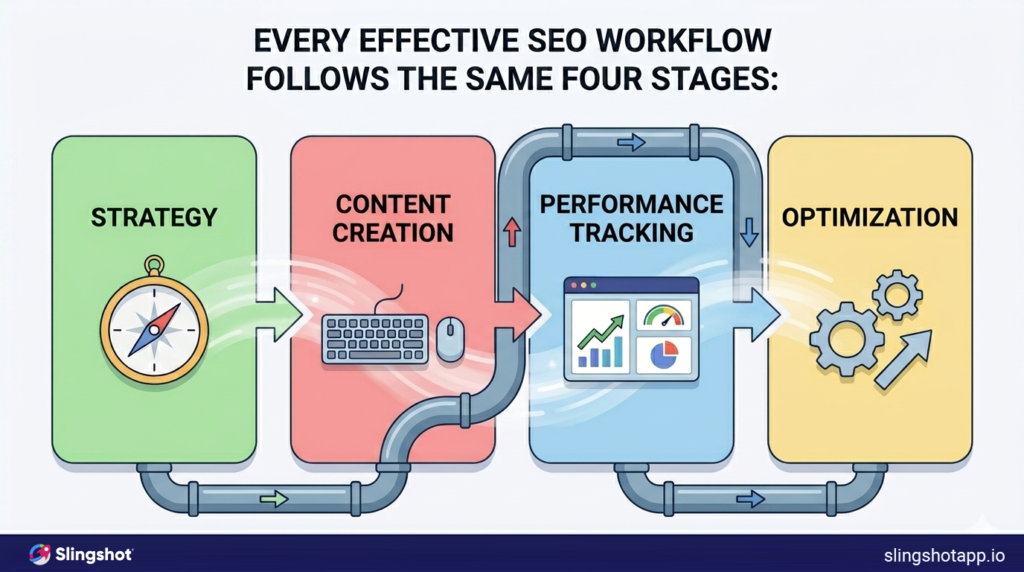
문제는 이러한 단계를 이해하지 못하는 것이 아닙니다. 이를 하나의 반복 가능한 시스템으로 연결하는 것입니다.
대부분의 팀은 이것들을 별도의 활동으로 취급합니다. 성과를 내는 팀은 이것들을 하나의 시스템으로 연결합니다.
실제로 실행되는 6단계 SEO 워크플로우
실행 중심의 실제 워크플로우는 다음과 같습니다:
1단계: 키워드를 추적 가능한 업무로 전환
키워드는 절대 독립적으로 남아있으면 안 됩니다.
각 키워드는 다음을 포함한 작업이 되어야 합니다:
- 명확한 소유권
- 우선순위 수준
- 콘텐츠 유형(블로그, 랜딩 페이지 등)
- 목표 게시 날짜
대부분의 워크플로우가 여기서 실패하는 곳입니다.
키워드가 스프레드시트에만 있으면 실행은 기억과 수동 후속 조치에 따라 달라집니다.
업무로 추적되지 않으면 완료되지 않을 것입니다.
예시:
키워드 목록 대신 다음을 생성합니다:
- "SEO 워크플로우 문서" → 작가에게 할당 → 기한 설정 → 상태 추적
이러한 전환은 전략을 실행으로 바꿉니다.
2단계: 구조화된 콘텐츠 브리프 생성
콘텐츠 생성이 시작되기 전에 모든 작업에는 정의된 브리프가 있어야 합니다:
- 대상 키워드
- 검색 의도
- 개요
- 내부 연결 전략
- CTA 방향
이것은 다음을 보장합니다:
- 일관성
- 품질
- SEO 목표와의 정렬
브리프가 없으면 콘텐츠가 일관성이 없어지고 확장하기가 더 어려워집니다. 또한 재작업을 야기합니다. 작가들이 추측합니다. 편집자가 수정합니다. 기한이 미뤄집니다.
SEO 템플릿: SEO 워크플로우를 표준화하고 싶습니십니까?
준비된
SEO 워크플로우 템플릿
을 탐색하여 키워드를 더 빠르게 구조화된 작업으로 전환합니다.
3단계: 소유권 및 기한 할당
실행의 모든 단계에는 소유권이 필요합니다:
- 작가
- 검토자
- 게시자
그리고 모든 단계에는 기한이 필요합니다.
이것이 없으면 콘텐츠가 진행 중단 상태로 남습니다.
성과를 내는 팀은 모호함을 제거합니다.
그들은 정확히 다음을 알고 있습니다:
- 누가 책임이 있는지
- 무엇을 해야 하는지
- 언제까지 해야 하는지
이것이 대부분의 SEO 실행 워크플로우가 실패하는 곳입니다. 소유자가 없으면 책임도 없습니다.
4단계: 반복 가능한 콘텐츠 워크플로우 구축
실행은 일관된 프로세스를 따라야 합니다:
- 키워드 할당
- 브리프 생성
- 콘텐츠 작성
- 검토 완료
- 편집 최종화
- 콘텐츠 게시
이것은 마찰을 제거하고 속도를 증가시킵니다. 매번 프로세스를 재창조하는 대신 팀은 시스템 내에서 작동합니다.
실행 중인 워크플로우 예시:
| 단계 | 담당자 | 상태 |
| 키워드 할당 | SEO 매니저 | 완료 |
| 브리프 생성 | 콘텐츠 리드 | 진행 중 |
| 초안 작성 | 작가 | 대기 중 |
| 검토 | 편집자 | 차단됨 |
이러한 가시성이 실행을 추진하는 것입니다.
5단계: 콘텐츠를 성능 추적에 연결
콘텐츠가 실시간이 되면 워크플로우는 끝나지 않습니다.
성능은 실행과 함께 추적되어야 합니다:
- 순위
- 트래픽
- 참여도
- 전환
이것은 무엇이 작동하고 무엇이 작동하지 않는지에 대한 가시성을 만듭니다.
6단계: 최적화 루프 구축
SEO는 일회성 작업이 아닙니다.
콘텐츠는 성능을 기반으로 지속적으로 개선되어야 합니다:
- 저성과 콘텐츠 업데이트
- 고성과 페이지 확대
- 순위를 기반으로 타겟팅 조정
실행 → 성능 → 최적화 → 반복
이것이 SEO를 성장 엔진으로 전환하는 것입니다. 이 단계가 없으면 SEO는 추측이 됩니다.
이것이 대시보드가 중요한 곳입니다. 각 업무에 연결된 성능을 볼 필요가 있습니다.
6단계: 최적화 루프 구축
SEO는 일회성 작업이 아닙니다. 콘텐츠는 성능을 기반으로 지속적으로 개선되어야 합니다:
- 저성과 콘텐츠 업데이트
- 고성과 페이지 확대
- 순위를 기반으로 타겟팅 조정
실행 → 성능 → 최적화 → 반복
이것이 SEO를 성장 엔진으로 전환하는 것입니다. 이 루프가 없으면 시간이 지남에 따라 콘텐츠가 쇠퇴하고 순위가 떨어집니다.
SEO 워크플로우가 실패하는 곳
정의된 프로세스가 있어도 대부분의 팀은 지속적으로 실행하는 데 어려움을 겪습니다.
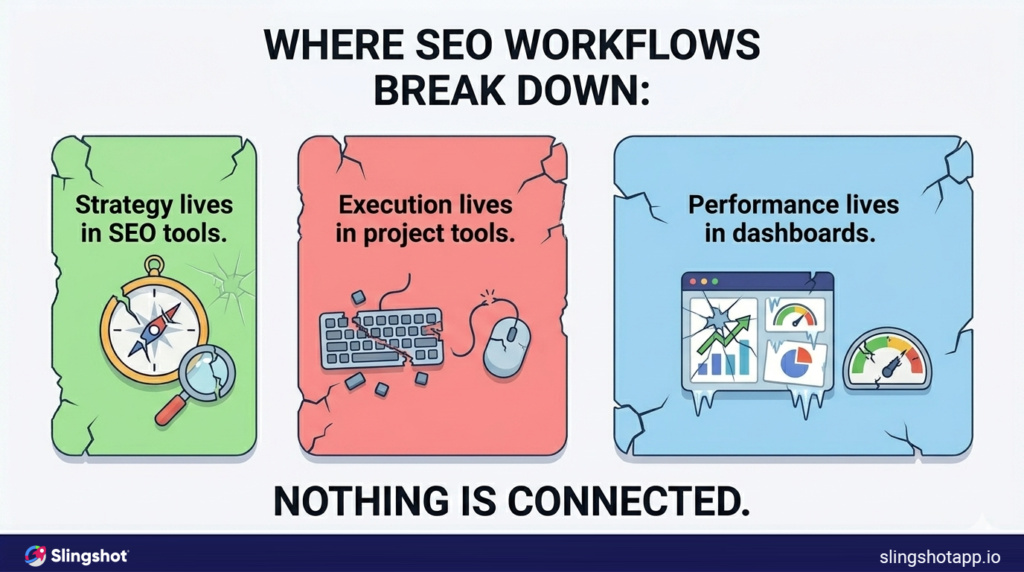
이유는 다음과 같습니다:
연결되지 않은 시스템
전략은 SEO 도구에 있습니다.
실행은 프로젝트 도구에 있습니다.
성능은 대시보드에 있습니다.
아무것도 연결되어 있지 않습니다.
결과: 업무가 시스템 간에 손실됩니다.
가시성 부족
팀은 다음을 쉽게 볼 수 없습니다:
- 진행 중인 것
- 차단된 것
- 완료된 것
그래서 업무가 느려집니다. 그리고 여러 콘텐츠에 걸쳐 지연이 누적됩니다.
소유권 부재
명확한 책임이 없으면 작업이 지연되거나 무시됩니다. 모두 다른 사람이 담당한다고 가정합니다. 아무도 하지 않습니다.
불일관한 프로세스
모든 콘텐츠는 다른 경로를 따릅니다. 표준 워크플로우가 없습니다.
그것은 확장을 막습니다.
확장되는 SEO 워크플로우를 구축하는 방법
SEO 실행을 일관되게 하려면 시스템이 필요합니다. 단순한 프로세스가 아닙니다.
1. 워크플로우 중앙화
전략, 실행, 성능을 한 곳으로 가져옵니다. 이것은 단편화를 제거하고 가시성을 개선합니다.
SEO 워크플로우는 다섯 가지 다른 도구에 걸쳐 있으면 안 됩니다.
2. 업무 수행 방식 표준화
모든 콘텐츠에 대한 반복 가능한 워크플로우를 정의합니다.
- 추측을 제거합니다.
- 속도를 증가시킵니다.
일관성은 팀이 품질을 희생하지 않고 결과물을 확장할 수 있게 해주는 것입니다.
3. 업무를 가시적으로
팀의 모든 사람은 다음을 알아야 합니다:
- 무엇을 작업 중인지
- 다음에 무엇이 오는지
- 무엇이 지연되었는지
가시성은 책임을 추진합니다. 업무가 보이지 않으면 앞으로 이동하지 않을 것입니다.
4. 실행을 성능에 연결
콘텐츠를 결과와 분리하지 마십시오. 성능을 수행되는 업무에 직접 연결합니다.
이것이 SEO 계획과 실행이 함께 오는 곳입니다.
5. 템플릿을 사용하여 마찰 감소
템플릿은 설정 시간을 제거하고 일관성을 강제합니다.
다음에 템플릿을 사용합니다:
- 키워드-업무 워크플로우
- 콘텐츠 브리프
- 캠페인 추적
이것이 팀이 구조를 희생하지 않고 더 빠르게 이동할 수 있는 방법입니다.
SEO 성공은 실행으로 귀결됩니다
대부분의 팀은 더 나은 키워드 전략이 필요하지 않습니다. 그들은 더 나은 실행 시스템이 필요합니다. SEO에서 승리하는 팀은 최고의 아이디어를 가진 팀이 아니기 때문입니다.
그들은 일관되게 아이디어를 게시되고 최적화된 콘텐츠로 전환하는 팀입니다.
실행은 승수입니다.
SEO 워크플로우를 시스템으로 전환하십시오
Slingshot은 마케팅 팀이 SEO 전략을 실행으로 전환하는 데 도움을 줍니다.
한 곳에서 키워드를 계획하고, 업무를 할당하고, 콘텐츠에 대해 협업하고, 성능을 추적합니다. 연결되지 않은 도구가 없습니다. 손실된 업무가 없습니다. 놓친 기한이 없습니다.
따라서 팀은 단지 SEO를 계획하지 않습니다.
실제로 실행합니다.
SEO 워크플로우에 대한 자주 묻는 질문
SEO 워크플로우는 키워드를 조사에서 게시된 콘텐츠와 지속적인 최적화로 이동시키는 프로세스입니다.
전략, 실행, 성능 추적, 최적화입니다. 실제로, 이것은 구조화된 6단계 실행 워크플로우가 됩니다.
소유권, 가시성, 연결된 시스템이 부족하기 때문입니다.
키워드를 추적 가능한 업무로 전환하고, 소유권을 할당하고, 성능에 연결된 반복 가능한 워크플로우를 따름으로써입니다.