
How Stephen Gould Scaled Its Capacity by 30% without Making a Single Hire

Campaigns Don’t Fail on Strategy. They Fail on Execution. Most marketing campaigns look solid on paper. The strategy is set, channels are selected, content is mapped out, and KPIs are clear. Then execution begins, and things slow down. Deadlines slip. Optimization stalls. Results fall short. And nobody can point to exactly where it went wrong. […]
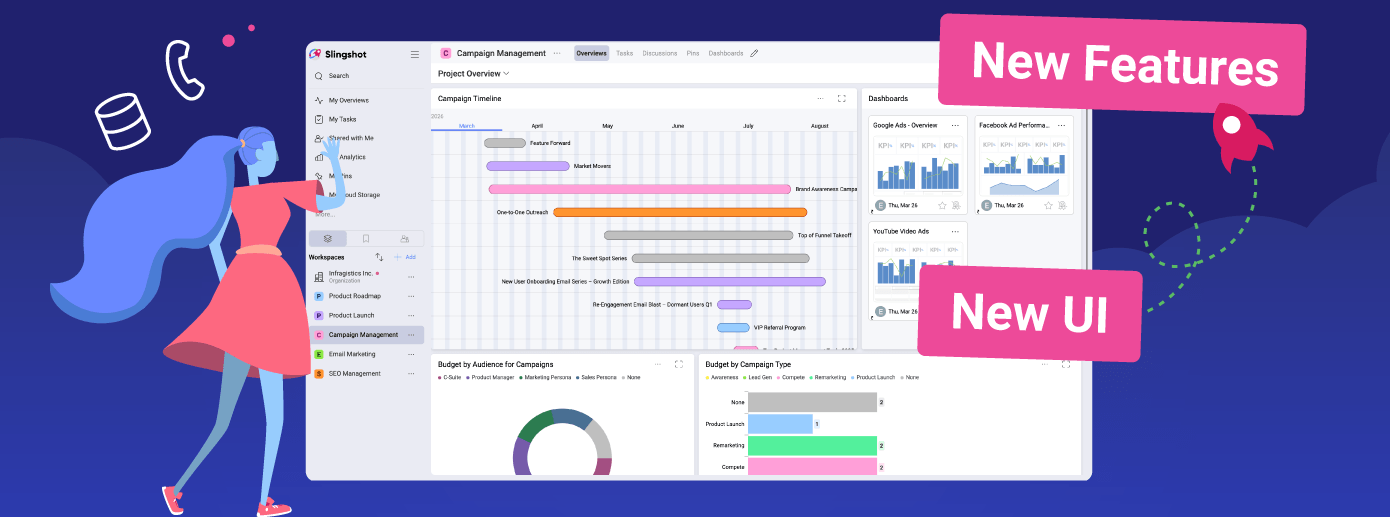
The April 2026 Slingshot release strengthens how teams collaborate, onboard, and connect their work to data—without switching tools. From Microsoft Teams calling built directly into chats, to faster onboarding with CSV import, to expanded data integrations, this release removes friction across your workflow and brings everything into one place.
Switching between reporting tools and project management feels normal. It’s actually slowing execution and costing you performance.
HubSpot, Salesforce, and GA4 are connected — so why does your data still feel fragmented? The issue isn’t where data lives.

Most marketing teams report activity—not revenue. Revenue accountable marketing connects campaigns, pipeline, and outcomes so teams can prove impact and drive growth.

Most marketing teams don’t need more dashboards. They need one trusted performance view that unifies their marketing performance dashboard data, connects work to results, and provides leaders with a single, reliable source for decision-making.
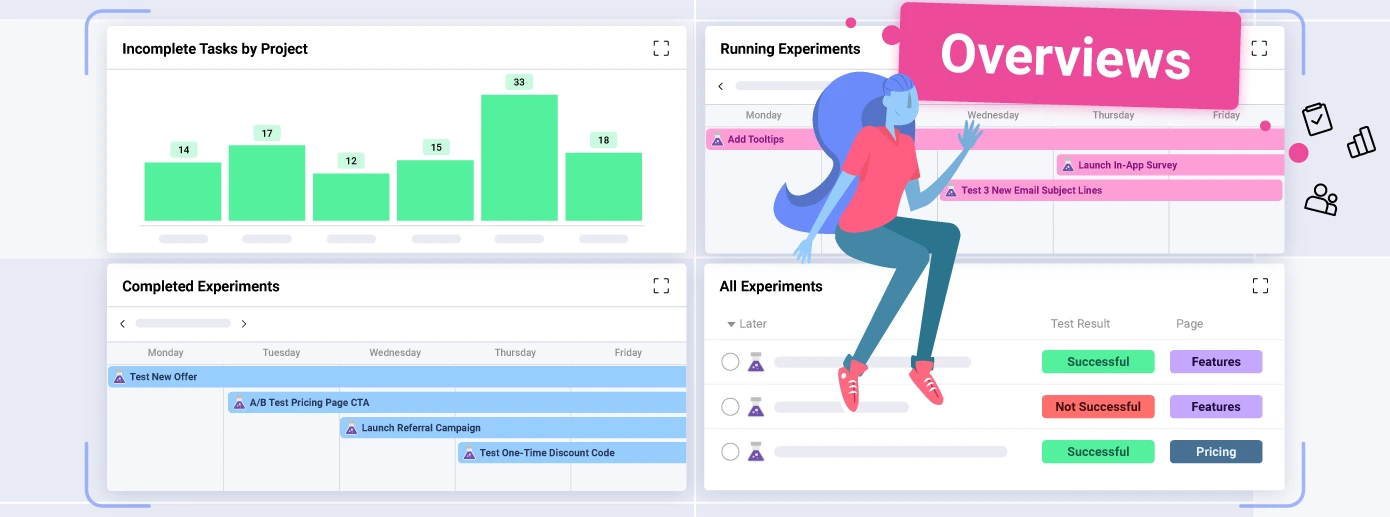
This release introduces five new features that help your team move from data to action faster. Overviews give you personalized dashboards that display tasks, metrics, and goals at a glance. Slingshot as a Data Source makes your Slingshot project data fully queryable inside dashboards, giving you deeper visibility into productivity and outcomes. Conditional Formatting, a native Databricks connector, and weekly chart aggregation give you more control, more context, and clearer insights; all in one platform.

Marketing leaders don’t lack data. They lack unified reporting. When metrics live acrossdisconnected systems, executives question the numbers instead of discussing strategy.

SaaS marketing teams don’t lack data. They lack a reliable marketing reporting system that clearly and confidently brings pipeline, attribution, and revenue metrics together.

Only 23% of employees feel trained to use AI effectively despite most organizations investing heavily in AI tools. This article explores why the AI skills gap persists and outlines practical steps leaders can take to build a truly AI-ready workforce through relevant training, clear policies, and everyday enablement.